Curriculum: What It Really Means for Indian Students and How It Shapes Their Future
When we talk about curriculum, the official set of subjects, skills, and learning goals taught in schools and colleges across India. Also known as syllabus, it’s not just a list of topics—it’s the hidden blueprint that decides who gets into IIT, who clears NEET, and who ends up with a job that pays well. Your curriculum doesn’t just tell you what to study. It tells you what’s valued, what’s tested, and what gets you ahead.
Take CBSE syllabus, the national standard followed by most Indian schools, including those preparing students for JEE and NEET. It’s designed to be uniform, but that doesn’t mean it’s easy. The pressure isn’t from the content itself—it’s from how much of it you’re expected to memorize, how fast you need to solve problems, and how little room there is for error. Meanwhile, ICSE curriculum, a more detailed, application-focused alternative used by private schools pushes deeper into critical thinking, but it’s not always aligned with the entrance exams students actually need to crack. And then there’s NEET syllabus, the medical entrance exam’s official content scope, which pulls directly from Class 11 and 12 biology, chemistry, and physics. If your school’s curriculum doesn’t cover the exact weightage or depth of NEET topics, you’re already behind before coaching even starts.
The curriculum isn’t just about textbooks. It shapes your daily routine, your stress levels, your choice of coaching centers, and even which city you move to for better prep. If your school teaches theory-heavy physics but the JEE tests problem-solving speed, you’re being trained for a different exam than the one you’ll face. That mismatch is why so many students burn out—not because they’re not smart, but because the system doesn’t always prepare them for the real test.
What you’ll find below isn’t just a list of articles. It’s a collection of real stories from students, teachers, and experts who’ve lived inside this system. You’ll see how curriculum gaps affect salaries, why some coaching centers dominate certain cities, and how the right learning path can turn a rigid syllabus into a launchpad—not a cage. Whether you’re trying to choose between CBSE and ICSE, figuring out how much of your NEET prep is actually in your school books, or wondering why your MBA program feels disconnected from real business, the answers are here.
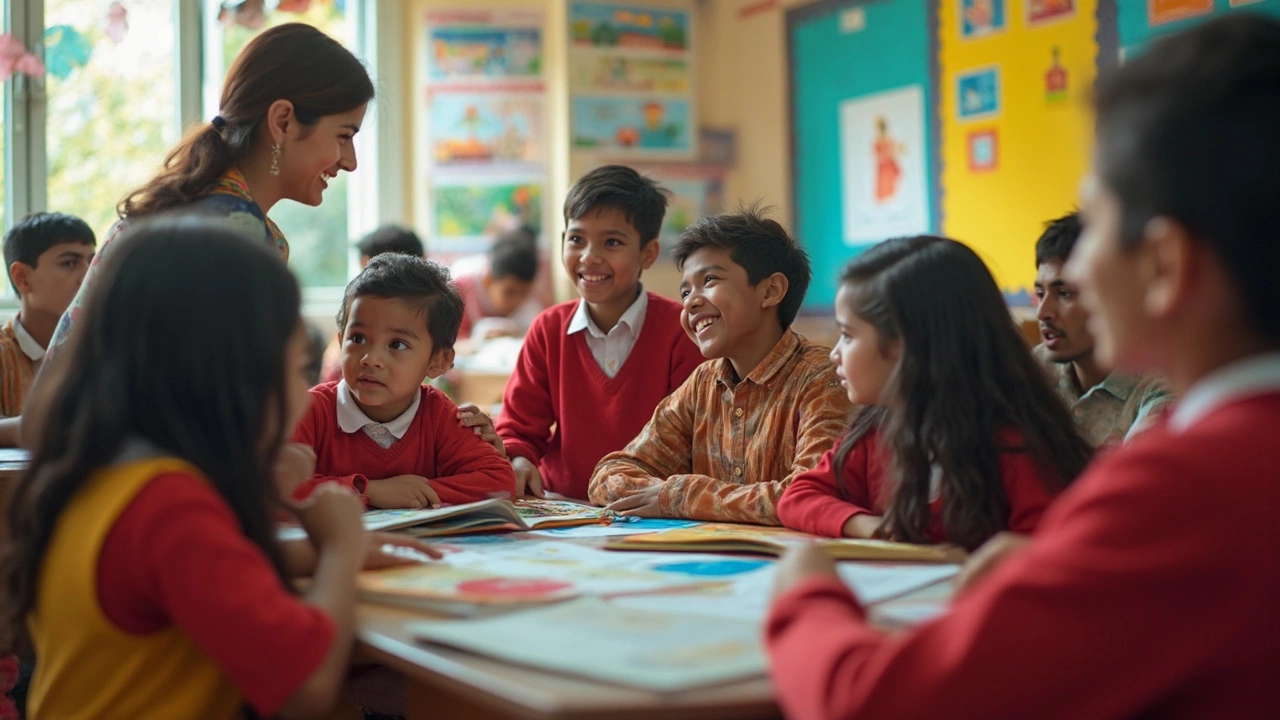
Is Delhi Public School ICSE or CBSE? Understanding Its Curriculum
- Myles Farfield
- 0 Comments
Delhi Public School, a popular choice among parents in India, offers a curriculum under the Central Board of Secondary Education (CBSE). It's essential to understand the differences between CBSE and ICSE to make informed decisions about school enrollments. Parents often seek CBSE for its nationalized approach and streamlined syllabus, while ICSE offers a wide-ranging curriculum. Knowing the specific board affiliation can help better prepare students for future academic endeavors.
Read more