Traditional Education: What It Really Means Today
When we talk about traditional education, a system centered on structured classrooms, fixed curriculums, and teacher-led instruction. Also known as formal schooling, it’s the model most Indian students grow up with—where you sit in rows, memorize textbooks, and take exams to prove you’ve learned it all. This isn’t just history. It’s still the main path for CBSE, ICSE, and state board students preparing for JEE, NEET, and civil services. The structure hasn’t changed much: bell schedules, blackboards, homework stacks, and annual exams rule the day.
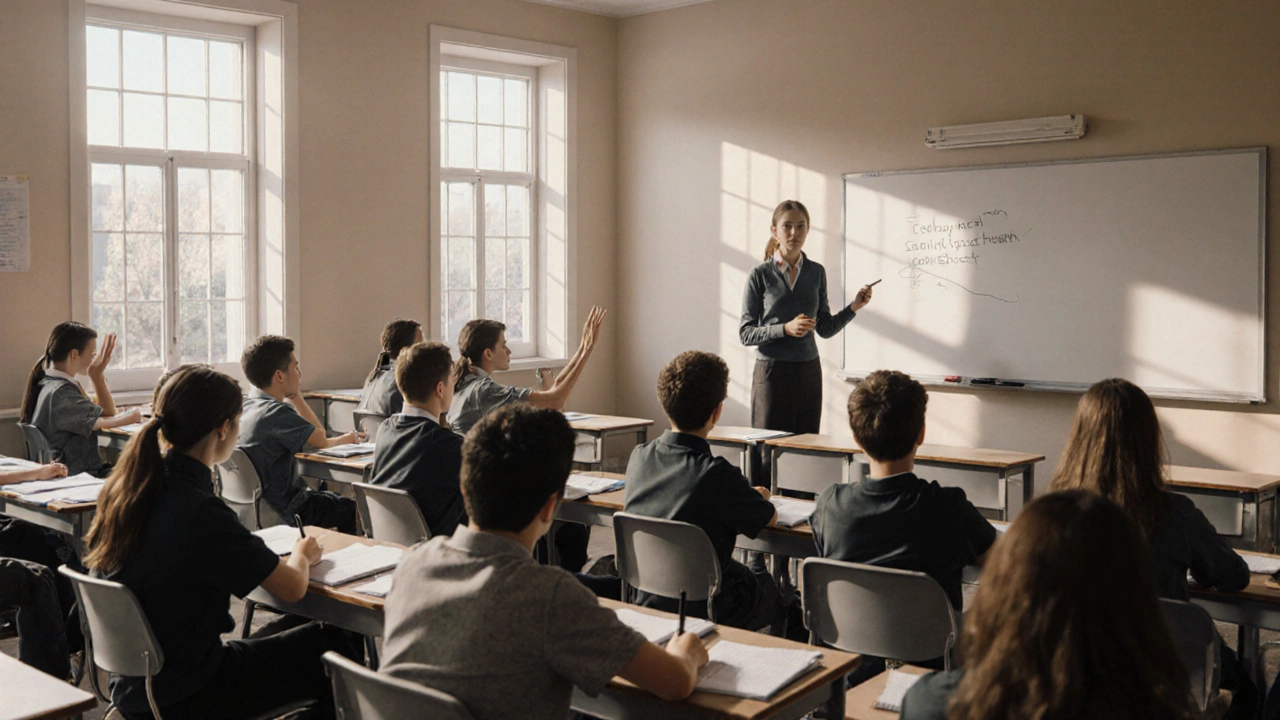
But here’s the thing—rote learning, the practice of memorizing facts without understanding why they matter—is baked into this system. You’re not asked to question why the Pythagorean theorem works. You’re told to memorize it, then solve 50 similar problems. This works for exams, sure. But what happens when you need to solve a real problem that doesn’t match the textbook? That’s where classroom learning, the environment where knowledge is delivered in one direction, from teacher to student often falls short. It doesn’t teach you how to think. It teaches you how to repeat. And that’s why so many students burn out after Class 12—even if they scored 95%.
Traditional education isn’t all bad. It gives structure. It creates a level playing field. It ensures every student in India, whether in a village school or a metro coaching center, follows the same syllabus. That’s why NEET and IIT aspirants from Kota, Delhi, or Hyderabad all study the same NCERT chapters. But the system doesn’t adapt. It doesn’t reward curiosity. It doesn’t care if you’re better at building things than memorizing dates. It only measures how well you recall what’s on the test.
That’s why you’ll find posts here about how to crack IITs, what it really takes to pass NEET, and whether an MBA needs math. All of them sit in the shadow of traditional education. They’re the results of a system that pushes students to perform, not to explore. The posts below don’t reject this system—they work within it. They show you how to survive it, beat it, and still keep your sanity. Whether you’re a student grinding through 12-hour study days, a parent wondering if coaching is worth it, or a teacher trying to make sense of it all—this collection gives you the real talk behind the textbooks.
What Is the Difference Between Classroom Learning and eLearning?
- Myles Farfield
- 0 Comments
Classroom learning offers structure and face-to-face interaction, while eLearning provides flexibility and personal control. Discover how each works, what they cost, and which suits your learning style best.
Read more