Coding and Math: How They Connect and Why It Matters for Students in India
When you think about coding and math, the relationship between writing programs and solving numerical problems. Also known as computational thinking, it's not about being a math genius—it's about using logic to break problems down. Most people assume you need advanced calculus to code, but that’s not true. In real life, coding relies more on patterns, structure, and persistence than on solving integrals. Whether you're learning Python, a beginner-friendly programming language used for everything from web apps to data analysis or prepping for IIT JEE, India’s toughest engineering entrance exam that tests both math and problem-solving under pressure, the real skill is knowing how to think, not how to memorize formulas.
Here’s the truth: most coding tasks use basic arithmetic, loops, and conditionals. You don’t need to know trigonometry to build a website. You don’t need to solve differential equations to automate a spreadsheet. But you do need to understand how to make decisions in code—like if this happens, then do that. That’s math, yes—but the kind you use every day when you budget, plan a route, or figure out how long your phone will last on 10% battery. The same logic applies. In fact, many students who struggle with school math find coding easier because it gives immediate feedback. You write a line, you run it, and you see if it works. No guessing. No partial credit. Just results.
And that’s why so many IIT aspirants, NEET teachers, and MBA students end up learning to code. It’s not because they love algorithms—it’s because they need to use data, automate tasks, or understand how tech works in their field. An MBA isn’t math-heavy, but it’s full of spreadsheets. NEET teachers use coding to track student progress. Even engineers who hate calculus find themselves writing scripts to save hours of manual work. The connection isn’t in the numbers—it’s in the mindset. Coding teaches you to test, fail, fix, and try again. That’s the same rhythm as solving a tough math problem. The difference? With coding, you get to build something useful while you learn.
What you’ll find below isn’t a theory lecture. It’s real advice from people who’ve been there: how many hours you should practice coding without burning out, whether Python is truly easy for beginners, what math you actually need for an MBA, and how IIT admission stats shape what students focus on. These aren’t abstract ideas—they’re tools you can use tomorrow. Whether you’re a student trying to pick a path, a parent wondering what’s worth the effort, or a teacher looking for better ways to explain concepts, this collection gives you clear, no-fluff answers. No hype. Just what works.
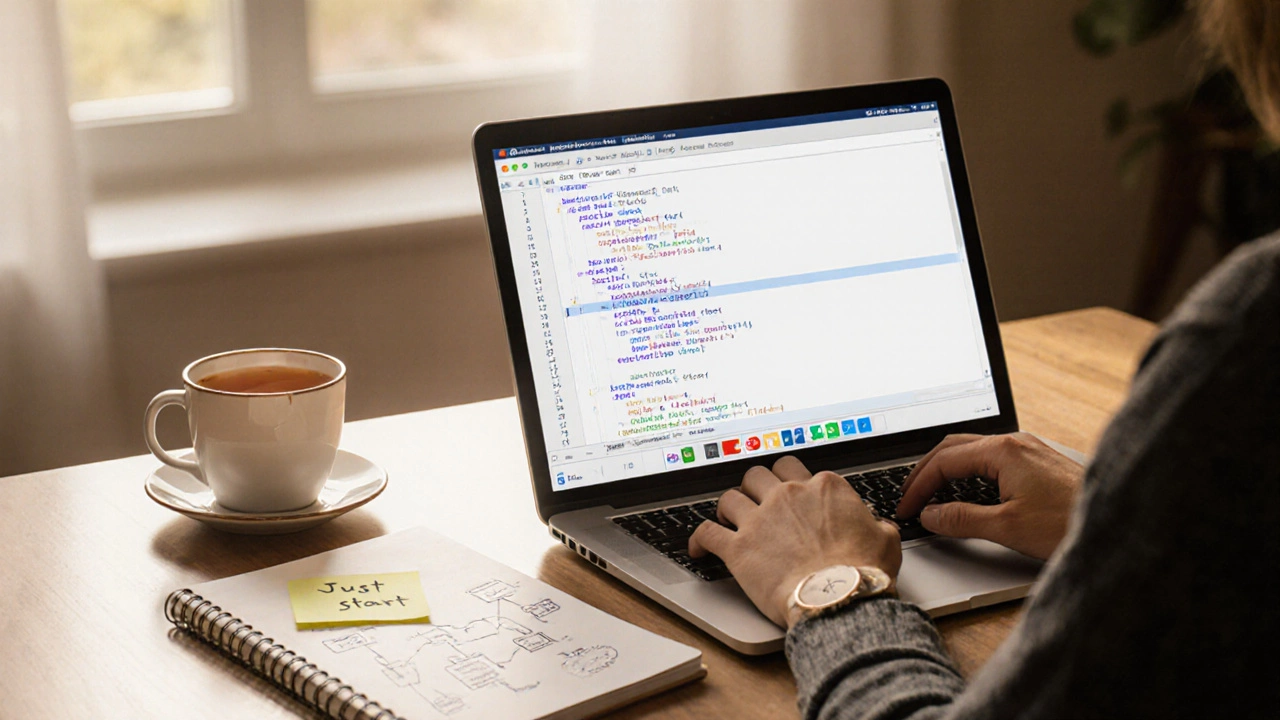
Do I Need to Be Good at Math to Code? The Real Answer
- Myles Farfield
- 0 Comments
You don't need to be good at math to code. Most programming jobs use only basic arithmetic and logic. Learn to solve problems step by step instead of worrying about advanced formulas.
Read more