
Government Exam Eligibility Checker
Check Your Eligibility
Determine if you meet the basic eligibility requirements for government positions through open competitive examinations. Note: Specific exams may have additional requirements.
Ever wonder how governments hire people for jobs like police officers, tax collectors, or district administrators? It’s not who you know or how much you can pay. It’s not luck or favoritism. It’s something called an open competitive examination. This system is the backbone of fair hiring in public service across countries like India, the United States, the United Kingdom, and many others. If you’ve ever thought about working for the government, this is where you start.
What Exactly Is an Open Competitive Examination?
An open competitive examination is a public, standardized test used to select candidates for government jobs based solely on merit. That means everyone who meets the basic eligibility rules-like age, education, or citizenship-can apply. There are no special connections, no backdoor deals, and no hidden criteria. Your score on the exam, and sometimes your performance in interviews or written essays, decides everything.This system was created to stop nepotism and corruption. Before these exams existed, government jobs were often handed out to family members or political allies. Now, if you’re the best candidate, you get the job-even if you come from a small town or a low-income family.
How Does It Work?
The process usually has three main stages:- Notification - The government announces job openings. They list how many positions are available, who can apply, what the exam covers, and the important dates.
- Written Examination - This is the biggest part. It’s usually multiple-choice, short-answer, or essay-based. Subjects vary by job. For example, a civil service exam might test general knowledge, math, logic, and language skills. A police officer exam might include physical fitness tests and scenario-based questions.
- Interview or Personality Test - If you pass the written test, you’ll face a panel of officials. They ask questions to see if you have the right attitude, communication skills, and judgment for public service.
Some exams have multiple rounds. In India, the UPSC Civil Services Exam has three stages: Prelims, Mains, and the Personality Test. In the U.S., the Federal Civil Service exam might have one written test and one interview. The structure depends on the country and the job.
Why Is It Called ‘Open’ and ‘Competitive’?
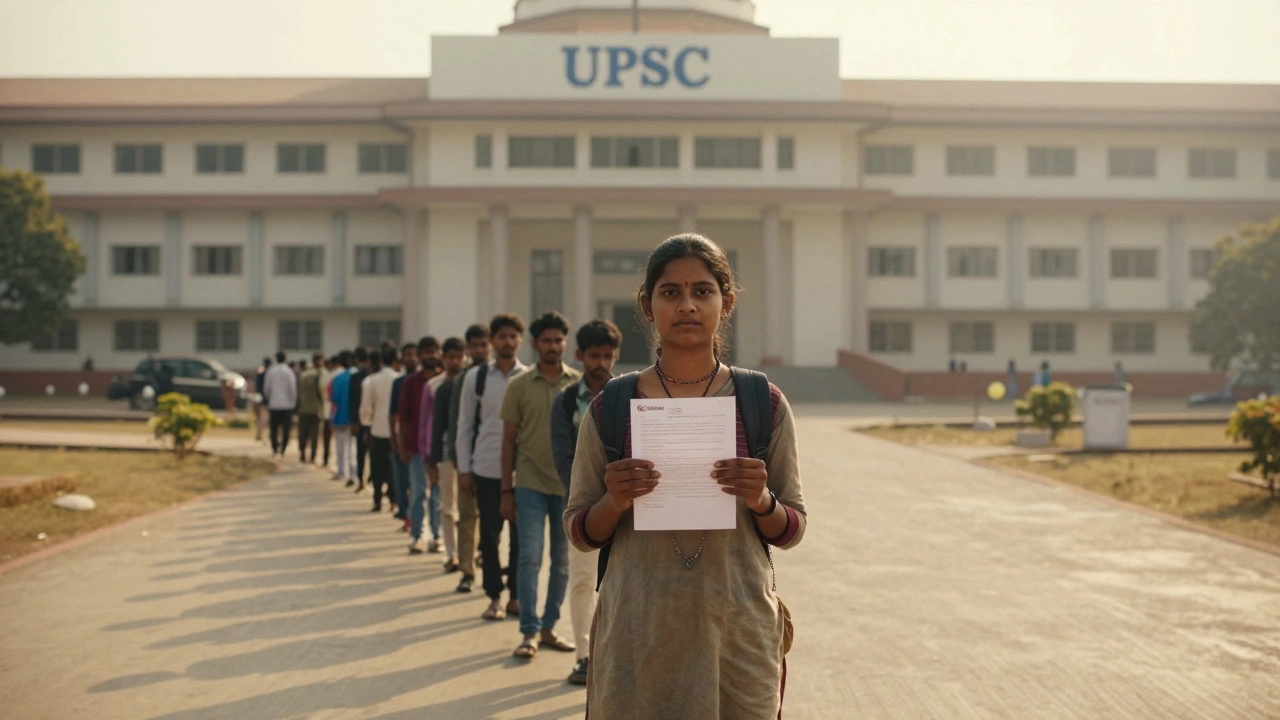
The word “open” means anyone who qualifies can enter. You don’t need a recommendation, a sponsorship, or money to get in. All you need is to meet the minimum requirements-like being over 21, having a bachelor’s degree, or being a citizen.“Competitive” means you’re not just taking a test to pass. You’re competing against hundreds or even thousands of others for a limited number of spots. For example, in India, over 1 million people apply for the UPSC exam every year, but only about 800 get selected. That’s less than 0.1% success rate. It’s not easy-but it’s fair.
Who Uses This System?
Most democratic countries use some form of open competitive examination. Here are a few examples:- India - The Union Public Service Commission (UPSC) runs exams for IAS, IPS, IFS, and other top civil services.
- United States - The Office of Personnel Management (OPM) administers exams for federal jobs like postal workers, tax auditors, and border patrol agents.
- United Kingdom - The Civil Service Fast Stream program uses assessments and interviews to recruit future government leaders.
- Japan - The National Public Service Commission holds exams for national-level bureaucrats.
- France - The École Nationale d’Administration (ENA) used to train top officials through competitive exams (though it was restructured in 2021).
Even in countries with different political systems, like Singapore and South Korea, merit-based exams are used to hire public servants. The idea is simple: if you’re good enough, you get the job. Period.
What Kind of Jobs Require These Exams?
Not every government job needs a competitive exam. Entry-level clerks or drivers might be hired through simpler processes. But the most respected, high-responsibility roles almost always require one. These include:- Indian Administrative Service (IAS)
- Indian Police Service (IPS)
- Income Tax Officer
- Customs Officer
- Foreign Service Officer
- Public Health Administrator
- Transportation Inspector
- Government Accountant
These jobs often come with authority, job security, and the power to shape policies that affect millions. That’s why the selection process is so strict.
What’s Tested in These Exams?
The content varies, but most exams test similar areas:- General Knowledge - Current events, history, geography, politics, and economics.
- Quantitative Skills - Math, data interpretation, logical reasoning.
- Language Ability - Reading comprehension, grammar, essay writing (often in the official language and sometimes a regional language).
- Critical Thinking - Case studies, situational judgment questions.
- Personality Assessment - In interviews, they look for integrity, emotional control, leadership potential, and public service mindset.
For example, the UPSC Mains exam includes papers on ethics, governance, and public administration. The U.S. Federal Law Enforcement exam tests knowledge of constitutional law and procedural justice. The goal isn’t to trick you-it’s to see if you can think clearly under pressure and make decisions that serve the public.
How to Prepare for an Open Competitive Examination
There’s no magic shortcut. Success comes from consistent effort. Here’s what works:- Know the syllabus inside out - Download the official exam pattern. Don’t rely on coaching centers or YouTube summaries. Go straight to the government’s website.
- Study past papers - These show you what kind of questions they ask. Patterns repeat. You’ll see the same topics come up year after year.
- Build daily habits - Read newspapers, follow policy debates, and write one essay a week. Skills like critical thinking and writing don’t improve overnight.
- Practice under timed conditions - Exams are long and stressful. Simulate real conditions. Time yourself. Learn to skip hard questions and come back.
- Join study groups - Talking through problems with others helps you see blind spots. But avoid gossip or negativity. Stay focused.
Many people fail not because they’re not smart enough-but because they start too late, study randomly, or give up after one failure. The top performers treat this like a marathon, not a sprint.
Why This System Still Matters Today
In a world full of inequality, open competitive examinations are one of the few tools that truly level the playing field. A boy from a village in Bihar can become India’s top bureaucrat. A single mother in rural Kentucky can rise to lead a federal agency. That’s powerful.It’s also a check on corruption. When hiring is based on scores, not connections, it’s harder to bribe or manipulate the system. It builds public trust. People believe the government works for them-not just for the rich or well-connected.
Even with digital advances, AI, and automation, these exams still matter. Why? Because leadership in public service isn’t just about technical skills. It’s about values: fairness, accountability, integrity. You can’t test those with algorithms. You need human judgment.
Common Myths About Open Competitive Examinations
- Myth: Only the rich can afford coaching. Truth: Free online resources, government-provided study materials, and public libraries make preparation possible for everyone. Many top rankers never paid for coaching.
- Myth: These exams are biased toward urban candidates. Truth: Papers are designed to be fair across regions. Many questions are based on national-level knowledge, not city-specific details.
- Myth: It’s impossible to crack. Truth: Thousands pass every year. It’s hard, yes-but not impossible. Persistence beats talent every time.
What Happens After You Pass?
Getting selected is just the beginning. You’ll usually go through training-sometimes for a year or more. You’ll learn how laws work, how budgets are made, how to handle public complaints. Then you’ll be posted to a real job, often in a remote area. The work is demanding. But it’s also meaningful.Many people who pass these exams say the real reward isn’t the salary or the title. It’s knowing you helped someone get clean water, a fair tax decision, or a better school for their child. That’s the power of public service.
Is an open competitive examination the same as a civil service exam?
Yes, in most cases. The term "civil service exam" usually refers to open competitive examinations used to hire government officials. While some countries use slightly different names, the core idea is the same: merit-based selection through standardized testing.
Can I take an open competitive examination more than once?
Absolutely. Most exams allow multiple attempts within age limits. For example, in India, candidates can try the UPSC exam up to six times until age 32 (with relaxations for certain groups). Many successful candidates clear the exam on their second or third attempt. Failure is part of the process-not the end of it.
Do I need a degree to take an open competitive examination?
For most top-level positions, yes. You typically need a bachelor’s degree from a recognized university. But some lower-level government jobs, like clerical or technical roles, may only require a high school diploma or vocational certification. Always check the official notification for exact eligibility.
Are open competitive examinations only for administrative jobs?
No. While they’re most famous for hiring civil servants like IAS or IRS officers, they’re also used for police, customs, forest services, engineers, auditors, and even scientists in government labs. Any job that requires high responsibility and public trust often uses this system.
How do I find official exam notifications?
Always go to the official government website. In India, it’s upsconline.nic.in. In the U.S., it’s usajobs.gov. In the UK, it’s civilservicejobs.service.gov.uk. Avoid third-party sites that charge for information. All notifications, syllabi, and application forms are free and publicly available.
Next Steps: Where to Go From Here
If you’re serious about joining public service, start by finding the exam relevant to your country and desired role. Download the official syllabus. Read one newspaper daily. Write one answer a week. Talk to someone who’s passed the exam. Don’t wait for motivation-build discipline. The system is designed for those who show up, day after day, even when no one is watching.Open competitive examinations aren’t perfect. They’re long, stressful, and sometimes outdated. But they’re still the best tool we have to make sure public service is for everyone-not just the privileged few. And if you’re willing to put in the work, it could change your life.
