Job Readiness Calculator
Assess Your Job Readiness
Your Job Readiness Assessment
Ready!Every week, someone asks: Can coders be self-taught? The answer isn’t yes or no-it’s yes, and here’s how it actually works. You don’t need a computer science degree to build apps, land a job, or even lead a team. But you also don’t just watch YouTube videos and wake up as a senior developer. The real path is messier, longer, and more disciplined than most tutorials admit.
What being a self-taught coder really means
Self-taught doesn’t mean alone. It means you didn’t follow a university syllabus. You didn’t pay $50,000 for a four-year program. You learned by doing-building something broken, fixing it, breaking it again, and repeating until it worked. That’s the core of it.
Most self-taught coders start with a problem they care about. Maybe they wanted a website for their small business. Or they got tired of manually sorting spreadsheets and built a script to do it. That spark matters more than any course outline. The best learners aren’t those who memorized syntax-they’re the ones who refused to give up when their code crashed for the 17th time.
According to Stack Overflow’s 2024 Developer Survey, nearly 40% of professional developers worldwide are entirely self-taught. That’s not a niche group. That’s a major part of the industry. Companies like Google, Meta, and Shopify hire self-taught coders every single day-not because they’re settling, but because they’ve proven they can solve real problems.
The myth of the overnight success
You’ve seen the headlines: "19-year-old builds app, sells for $10M." That’s not the norm. That’s the outlier. The real story is someone spending 18 months coding after work, on weekends, during lunch breaks. They built five projects that never launched. They got stuck on a bug for three days. They cried over a missing semicolon. Then they got hired.
There’s no shortcut. But there is a pattern. Most successful self-taught coders follow this cycle:
- Start small: Build a to-do list app. Not a social network. Not an AI chatbot. A to-do list.
- Break it: Make it crash. Fix it. Do it again.
- Build something useful: A tool that saves you time. A script that automates a boring task.
- Share it: Put it on GitHub. Show it to someone. Ask for feedback.
- Repeat: Build something harder. Then harder again.
This isn’t theory. This is how people in Auckland, Lagos, and Lima are getting hired without degrees. They didn’t wait for permission. They just started.
What you actually need to learn
Forget the 100-hour "bootcamp" promises. Real coding skills take time. Here’s what actually matters:
- One programming language deeply: Pick JavaScript, Python, or Ruby. Learn it until you can write code without Googling every keyword. Don’t jump between languages.
- How to read documentation: The official docs for React, Django, or Node.js are your new bible. If you can’t read them, you’re stuck.
- Version control with Git: You don’t need to know every command. But you must know how to commit, push, and clone. GitHub isn’t just a portfolio-it’s your resume.
- Debugging: This is 70% of real coding. Learn how to use browser dev tools, console logs, and error messages. If you can’t find a bug, you can’t fix it.
- Basic algorithms and data structures: Not for interviews. For writing code that doesn’t crash when 100 people use it.
These aren’t fancy topics. They’re the boring, essential stuff. The stuff no one posts about on TikTok. But they’re the only things that get you hired.
Free resources that actually work
You don’t need to pay for courses. Here are the free tools that real self-taught coders use:
- freeCodeCamp: Full curriculum from HTML to JavaScript to databases. Projects are real-world.
- The Odin Project: Project-based learning with a clear path to job readiness. Used by thousands globally.
- MDN Web Docs: The official guide for web technologies. Accurate, clear, and always updated.
- GitHub: Not just for hosting code. Search for "beginner-friendly" issues. Fix a typo in an open-source project. That’s your first real contribution.
- YouTube channels like Traversy Media and Web Dev Simplified: No fluff. Just clear, practical tutorials.
These aren’t "best of" lists. These are the tools people actually use to get jobs. No certificates. No paid memberships. Just work.
Building a portfolio that gets noticed
A GitHub profile with three to-do list apps won’t get you hired. You need projects that show impact.
Here’s what works:
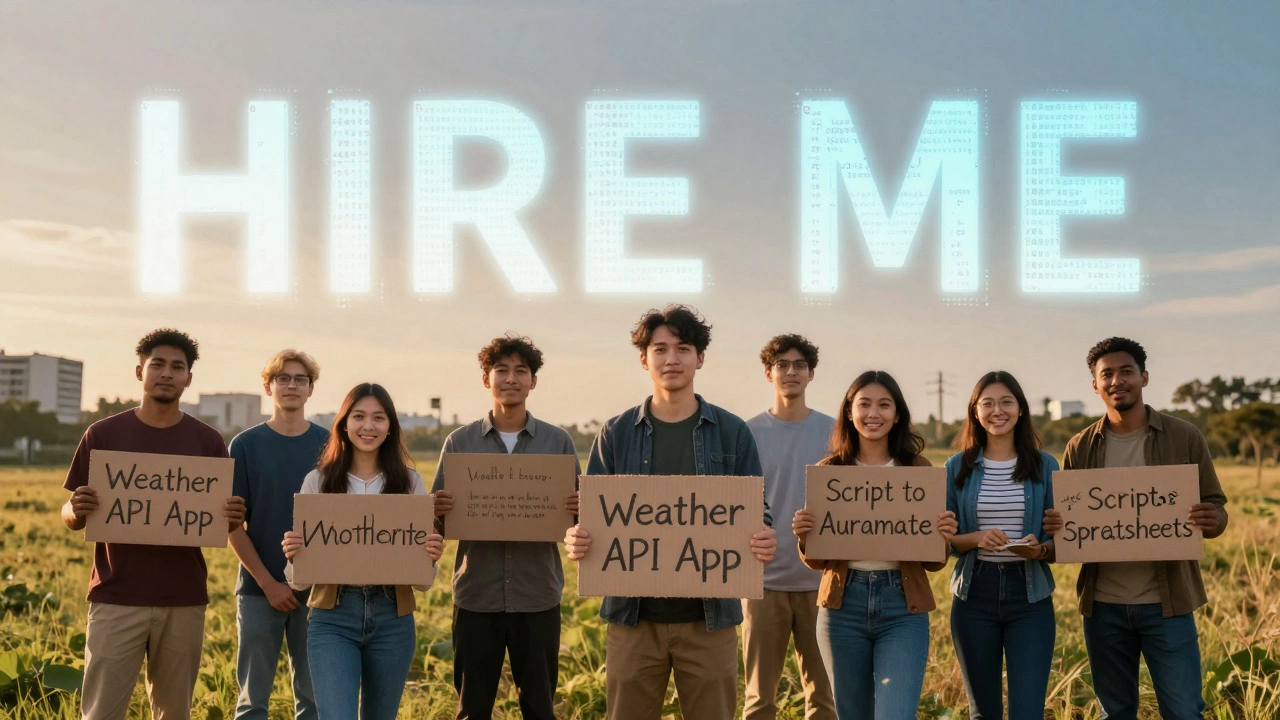
- A weather app that pulls data from a public API and displays it in a clean UI.
- A budget tracker that lets users input expenses and generates charts.
- A simple job board built with a backend and database-no templates, no drag-and-drop.
- A script that scrapes data from a public site and emails you daily updates.
Each project should have:
- A clear README explaining what it does and how to run it.
- Commit history showing progress-not just one big push.
- A live demo link (use Netlify or Vercel for free hosting).
Companies don’t care if you went to Harvard. They care if you can fix their broken login page. Your portfolio is your proof.
Getting hired without a degree
How do you get past the HR filter when you don’t have a degree? You bypass it.
Apply to startups. Small agencies. Remote-first companies. They care more about what you can do than where you studied. Look for job posts that say "portfolio required" or "no degree needed."
When you apply:
- Don’t send a resume. Send a link to your GitHub and live projects.
- In your message, say: "I built X to solve Y. Here’s how it works. I’d love to help you with Z."
- Be ready to code live. Many interviews start with a shared code editor. Practice on CoderPad or Replit.
Entry-level roles like Junior Developer, Frontend Intern, or Technical Support Analyst are your foot in the door. You don’t need to be perfect. You just need to be reliable.
The hidden challenge: discipline
The hardest part isn’t learning to code. It’s showing up every day when no one’s watching.
University gives you deadlines, exams, and professors pushing you. Self-teaching gives you silence. And silence kills motivation faster than any bug.
Here’s how to stay on track:
- Code for 30 minutes every day. Even if it’s just fixing one bug.
- Join a Discord server for learners. Talk about what you’re stuck on.
- Find one person to share your progress with. Accountability works.
- Track your time. Use a simple spreadsheet. Seeing 200 hours logged after six months is proof you’re moving.
Progress isn’t loud. It’s quiet. It’s showing up when you’re tired. That’s what separates the ones who make it from the ones who quit.
What comes after the first job
Getting hired is just the start. The real learning begins when you’re on the team.
You’ll face code reviews you don’t understand. You’ll inherit spaghetti code. You’ll be asked to fix something you’ve never seen before.
That’s normal. Everyone feels that way at first. The difference? Self-taught coders are used to figuring things out alone. That skill becomes your superpower.
After your first year, you’ll start mentoring others. You’ll write blog posts. You’ll speak at local meetups. You’ll realize: you’re not just a coder. You’re a problem-solver. And that’s worth more than any degree.
Final thought: You don’t need permission
Some people will tell you you’re not qualified. That you need a degree. That you’re "just a hobbyist."
Ignore them.
The tech industry doesn’t care where you learned. It cares what you built. And right now, there are more jobs than qualified people. If you’re willing to put in the work, you don’t need a stamp from a university. You just need to start.
Can you really get a coding job without a degree?
Yes. Over 40% of professional developers are self-taught, according to Stack Overflow’s 2024 survey. Companies hire based on skills, not diplomas-especially startups and remote teams. A strong portfolio with real projects and clean code matters more than a degree.
How long does it take to become job-ready as a self-taught coder?
Most people reach job readiness in 6 to 18 months, depending on how much time they put in. If you code 15-20 hours per week, you can be ready in under a year. The key isn’t speed-it’s consistency. Building three real projects with live demos is more valuable than finishing ten courses.
What’s the most important skill for a self-taught coder?
Debugging. Knowing how to read error messages, use browser tools, and trace problems step-by-step is more important than knowing every framework. Real code breaks constantly. The ability to fix it-not just write it-is what makes you valuable.
Do you need to know math to be a coder?
Not for most roles. Basic arithmetic and logic are enough for web development, mobile apps, and even many backend systems. Advanced math is only needed for data science, game engines, or machine learning-areas that make up a small fraction of coding jobs. Focus on problem-solving, not formulas.
Is it too late to start learning to code at 30, 40, or older?
Absolutely not. The average age of self-taught coders switching careers is 34. Many come from teaching, nursing, retail, and construction. What matters is your ability to learn and solve problems-not your age. Companies need people who can think critically, and life experience often gives you an edge.
