
MBA Cost & ROI Calculator
Calculate Your MBA ROI
Estimate how long it will take to recoup your MBA investment based on your current situation.
Your MBA ROI Estimate
Enter your details to see your estimated return on investment.
People ask if it matters where you get your MBA like it’s a yes-or-no question. It’s not. The answer depends on what you want to do, where you want to work, and how much you’re willing to pay. A top-tier MBA from Harvard or Stanford doesn’t automatically make you successful. But skipping a well-known program might close doors you didn’t even know were locked.
Not all MBAs are created equal - and it’s not just about rankings
You’ve seen the lists: Harvard, Stanford, Wharton, INSEAD, London Business School. These schools dominate headlines and salary reports. But behind the numbers, there’s a real difference in what you get. At a top 10 school, you’re not just learning finance or strategy. You’re walking into a network that includes CEOs, venture capitalists, and alumni who hire from their own pool. At a regional or online program, you’re learning the same material - but the access is different.
A 2024 survey by the Graduate Management Admission Council showed that 78% of hiring managers at Fortune 500 companies prefer candidates from top 20 MBA programs for leadership roles. That doesn’t mean others are worthless. It means the first impression matters. Your resume lands in a pile. If your school name isn’t familiar, your application might not even make it to the interview stage - no matter how strong your experience.
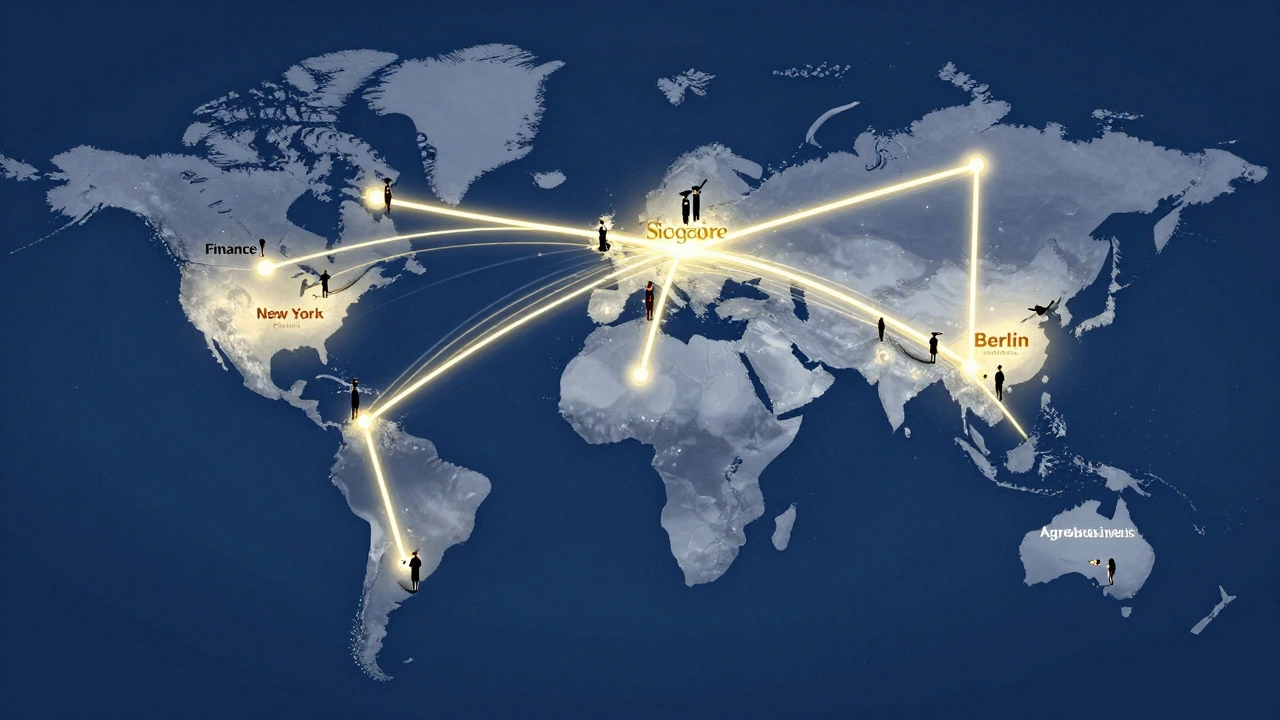
Location shapes your career path
Where your MBA is based often determines where you end up working. If you go to a school in New York, you’ll get recruited by banks, private equity firms, and consulting companies based there. If you’re at INSEAD in France or Singapore, your job offers will lean toward global roles in Europe and Asia. A school in Chicago might connect you with manufacturing and supply chain giants. A school in Sydney? You’ll likely land roles in mining, resources, or Australian fintech.
One MBA graduate from the University of Auckland’s Business School told me he got his first job at a New Zealand-based agribusiness because the school had direct ties with local industry leaders. He could’ve gotten the same degree online from a U.S. school, but he wouldn’t have had the same access to local employers. Your MBA doesn’t just teach you - it introduces you.
Cost vs. return: Is a $100,000 MBA worth it?
The average cost of a full-time MBA in the U.S. is now around $110,000, not including lost income from two years out of work. In Europe, it’s closer to $60,000-$80,000. In India or Latin America, you might pay under $20,000. So why do people still pay top dollar?
Because the payoff isn’t just salary - it’s speed. Graduates from top 10 programs see median starting salaries of $150,000-$180,000. Within three years, many double that. At lower-ranked programs, median starting pay might be $70,000-$90,000. The gap doesn’t close quickly. One study from MIT Sloan tracked MBA grads over five years and found that those from top schools earned 47% more on average, even after controlling for pre-MBA experience.
But here’s the catch: if you’re already in a high-paying job, an MBA from a lesser-known school might not move the needle. If you’re switching industries or moving countries, the brand matters more. Your ROI depends on your starting point.
Specializations and niche programs can beat big names
What if you want to work in sustainability? Or healthcare management? Or social impact investing? Some of the best programs aren’t in the top 10 - they’re in schools that focus hard on one area. For example:
- Yale School of Management is known for social impact and ESG investing.
- UC Berkeley Haas has strong ties to tech startups and venture capital.
- INSEAD’s one-year program is ideal for international career changers.
- Thunderbird School of Global Management specializes in global supply chains.
These schools don’t have the same name recognition as Harvard - but if you’re targeting a specific field, they give you better access, better professors, and better job pipelines. A specialized MBA from a lesser-known school can outperform a generic MBA from a top 5 school - if your goals match the program’s focus.
Online MBAs are getting real - but they’re not for everyone
Five years ago, online MBAs were seen as a backup. Today, schools like Indiana Kelley, UNC Kenan-Flagler, and the University of Illinois offer fully accredited online MBAs with the same curriculum and faculty as their on-campus versions. Some even have in-person residencies and networking events.
But here’s the truth: employers still notice the difference. A 2025 survey by LinkedIn found that 62% of recruiters still view on-campus MBAs as more credible - especially for leadership roles. Online MBAs work great if you’re staying in your current company, upskilling while working, or moving into a role that doesn’t require brand recognition. But if you’re trying to break into finance, consulting, or top-tier tech, the lack of campus presence can hurt your chances.

What really matters: your goals, not the logo on your diploma
Let’s say you’re a project manager in Melbourne and want to move into senior operations. You don’t need a Harvard MBA. You need a program that connects you with local supply chain leaders, teaches you advanced analytics, and gives you a credential that your current employer respects. A local MBA from Monash or RMIT might be perfect.
Or you’re a tech entrepreneur in Berlin and want to raise a Series A. You don’t need a U.S. school. You need a program with strong ties to European VCs - like HEC Paris or IE Business School.
The MBA isn’t a magic ticket. It’s a tool. And like any tool, its value depends on how well it fits the job. If your goal is to climb the corporate ladder in a global firm, then yes - the school name matters. If you’re building your own business or advancing in your current industry, the content, network, and flexibility matter more.
How to choose the right MBA for you
Here’s a simple checklist to cut through the noise:
- Where do you want to work after graduation? Match the school’s location and recruiter presence.
- What industry are you targeting? Look for schools with strong alumni networks in that field.
- What’s your budget? Don’t take on $150,000 in debt unless you’re sure you’ll earn back double that in three years.
- Can you afford to take two years off? If not, consider part-time, executive, or online options.
- Who are the alumni? Search LinkedIn for graduates from the program. Do they work where you want to work?
Don’t pick a school because it’s ranked high. Pick it because it opens the doors you care about.
Final thought: Your effort matters more than your school
There are plenty of people with Stanford MBAs who are stuck in mid-level jobs. And there are people with degrees from unknown schools who run multi-million-dollar businesses. The MBA opens doors - but it doesn’t walk through them for you.
The real value of an MBA isn’t the logo on your resume. It’s the skills you build, the people you meet, and how hard you work after graduation. A top school gives you a head start. But if you don’t use it, the advantage fades fast.
Does the MBA ranking really affect job offers?
Yes - but not always. Top-ranked schools get more recruiter visits, higher starting salaries, and faster hiring timelines. For roles in consulting, investment banking, or global tech firms, the school name still carries weight. But for internal promotions, entrepreneurship, or niche industries, your experience and network matter more than the ranking.
Can I get a good MBA without going to the U.S.?
Absolutely. Schools like INSEAD (France/Singapore), London Business School, IE Business School (Spain), and the University of Auckland’s Business School offer world-class programs with strong global recognition. Many European programs are one year, cheaper, and focus on international careers. If you’re targeting Asia, Europe, or Australasia, a non-U.S. MBA can be just as valuable - and sometimes more relevant.
Is an online MBA worth it?
It depends on your goals. Online MBAs from reputable schools like UNC, Indiana Kelley, or Illinois are fully accredited and respected for career advancement within your current company. But if you’re trying to switch industries, relocate internationally, or enter competitive fields like consulting or finance, employers still favor on-campus programs. The lack of in-person networking and campus recruitment can be a real disadvantage.
How much does an MBA cost in New Zealand?
A full-time MBA in New Zealand typically costs between NZ$45,000 and NZ$65,000, depending on the school. Programs at the University of Auckland, Victoria University, or Otago are well-regarded locally and offer strong ties to the Asia-Pacific job market. Compared to U.S. or U.K. schools, they’re significantly cheaper - and you’ll graduate with less debt and local industry connections.
Should I get an MBA if I’m already earning $100,000 a year?
Only if you’re hitting a ceiling. If you’re in a role where promotion requires an MBA - like corporate strategy, finance leadership, or senior operations - then yes. But if you’re already earning well and your company doesn’t require it, the return on investment might be low. Many professionals in tech, engineering, or creative fields advance without an MBA by building skills, leading projects, and expanding their network.
