
How long does it take to learn coding? It’s not a question with one answer. Some people pick up basic skills in a few weeks. Others spend years mastering complex systems. The truth? It depends on what you want to do, how much time you put in, and what kind of support you have.
What does ‘learn coding’ even mean?
Most people think learning to code means becoming a software engineer. But that’s not the only path. Maybe you want to build a simple website for your small business. Or automate your spreadsheets. Or create a mobile app for your side hustle. Each goal has a different timeline.
If you’re aiming to build a basic website using HTML and CSS, you can get started in under two weeks. That’s enough to change text, add images, and style a page. Add JavaScript, and you can make buttons work and forms submit. That’s about four to six weeks of consistent practice-around 10 hours a week.
But if you want to build a full-stack web app with a database, user authentication, and APIs? That’s a different story. It takes six to twelve months of steady learning, even with coding classes. You’ll need to understand backend languages like Python or Node.js, databases like PostgreSQL, and deployment tools like Docker. This isn’t about memorizing syntax-it’s about solving real problems.
How fast can you go with coding classes?
Coding bootcamps promise to turn you into a developer in 12 weeks. And some people do land jobs after that. But here’s what they don’t tell you: those 12 weeks are intense. Most successful students spend another 20-30 hours a week outside class practicing. They’re not just watching videos-they’re building projects, fixing bugs, and asking questions on forums like Stack Overflow.
A 2023 study from the University of Auckland tracked 217 people who completed online coding bootcamps. After six months, 68% were working in tech roles. But only 31% had zero prior experience. The rest had dabbled in coding before-maybe through YouTube tutorials, school projects, or personal experiments. If you’re starting from scratch, expect to need more time.
Coding classes help, but they’re not magic. They give you structure, feedback, and a community. But real learning happens when you’re stuck on a bug at 2 a.m. and you push through it. That’s where confidence builds.
Time investment matters more than speed
People who learn fastest aren’t necessarily the smartest. They’re the ones who code every day-even for 20 minutes. Consistency beats cramming. If you spend five hours on Saturday and then don’t touch your laptop for a week, you’ll forget half of it. But if you code 30 minutes every morning, your brain starts to think in code.
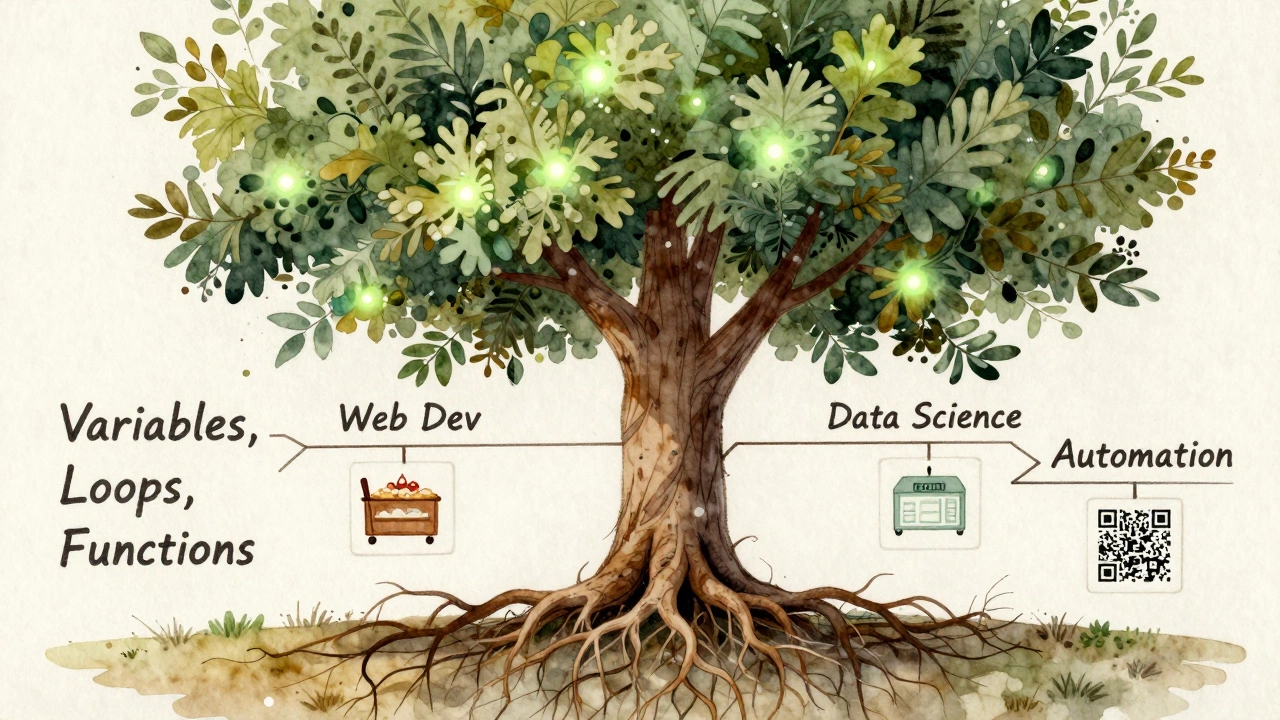
Think of it like learning to play guitar. You don’t become a rock star after one lesson. You start with chords, then scales, then songs. Coding is the same. You start with variables and loops, then functions, then building small tools. Each step builds on the last.
One student I know in Wellington spent 45 minutes a day coding after work. After nine months, she built a simple inventory tracker for her mum’s bakery. It saved her 10 hours a week. She didn’t become a senior developer-but she solved a real problem. That’s the goal.
What skills can you learn in different timeframes?
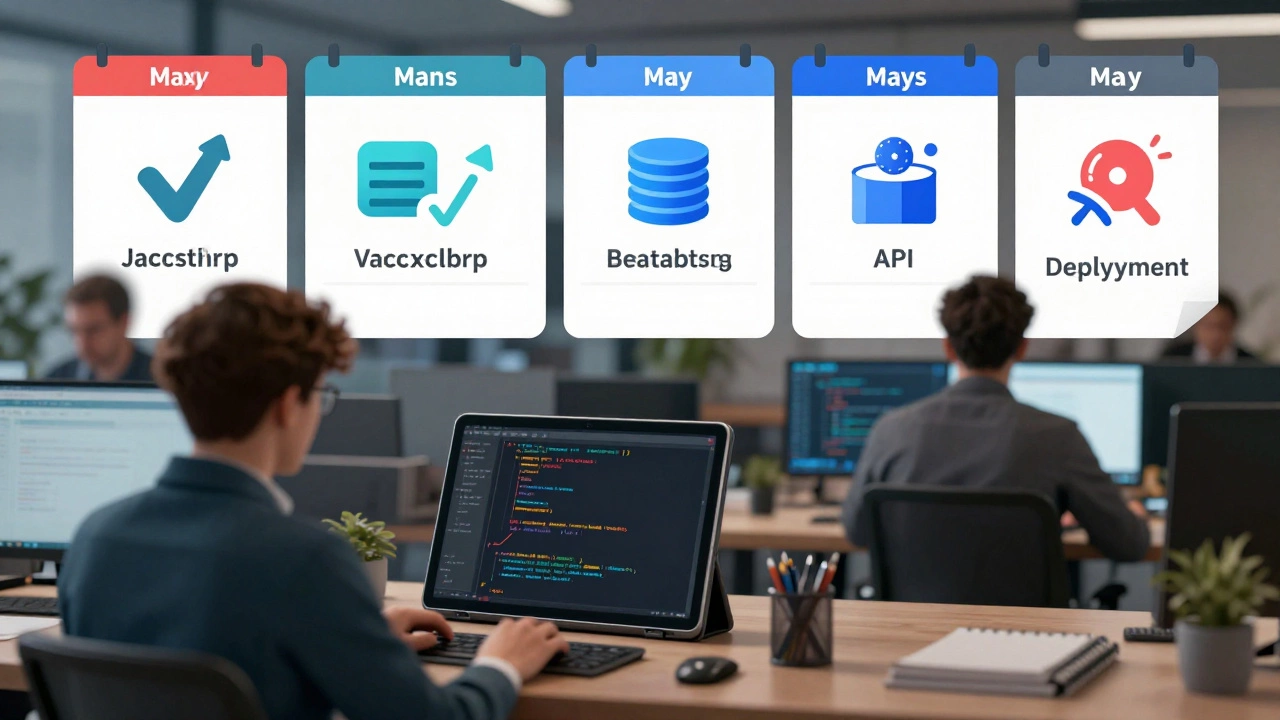
- 1-2 weeks: Basic HTML and CSS. You can create a static webpage. Good for landing pages or simple portfolios.
- 4-6 weeks: Add JavaScript. You can make interactive elements-dropdown menus, form validation, animations.
- 3-4 months: Build a full-stack app. Use Python (Django or Flask) or JavaScript (Node.js) with a database. Create a blog, task manager, or weather app.
- 6-12 months: Work with APIs, cloud hosting, testing, and version control. You can contribute to open-source projects or apply for junior developer roles.
- 1-3 years: Specialize. Learn mobile development (React Native), data science (Python + Pandas), or cybersecurity. Become someone companies hire.
These aren’t deadlines. They’re milestones. Some people skip ahead. Others take longer. That’s normal.
What slows people down?
Most beginners don’t fail because they’re not smart. They fail because they chase the wrong things.
They jump from Python to JavaScript to Rust without mastering the basics. They buy expensive courses but never write code. They compare themselves to YouTube stars who’ve been coding for ten years.
Here’s what actually works:
- Build something small every week-even if it’s just a calculator or a to-do list.
- Break big problems into tiny pieces. Don’t try to build an app like Instagram on day one.
- Use free resources: freeCodeCamp, The Odin Project, or Codecademy’s free tier.
- Read other people’s code. GitHub has millions of public projects. Look at how they structure things.
- Ask for help early. Don’t waste three hours on a typo when a quick Google search or Reddit post can fix it.
One common mistake? Waiting to feel ready. You never feel ready. You just start.
Can you learn coding while working full-time?
Yes. But you need to be realistic. If you work 40 hours a week, have kids, and commute an hour each way, you won’t have 20 hours a week to code. That’s okay.
Start with 10 hours a month. That’s two hours a week. Focus on one skill. Build one project. Stick with it for six months. You’ll be further ahead than someone who burns out after three weeks.
Many people in New Zealand learn coding while working in retail, healthcare, or admin roles. They don’t quit their jobs. They add coding as a skill. Eventually, they move into tech support, data entry automation, or digital roles within their current industry.
It’s not about becoming a Silicon Valley engineer. It’s about making your current job easier, or opening doors to better opportunities.
What’s the fastest way to get results?
Stop learning for the sake of learning. Start building for a reason.
Here’s a real example: A teacher in Christchurch wanted to track student attendance without paper. She spent six weeks learning Python and built a simple script that scanned QR codes on student ID cards. It saved her 3 hours a week. She didn’t need a degree. She just needed a goal.
Find your own reason. Maybe you want to:
- Automate your monthly budget spreadsheet
- Create a website for your craft business
- Build a tool that pulls data from your fitness tracker
When you’re solving a problem you care about, you’ll stick with it. And that’s how people really learn.
Is coding a good skill to learn in 2025?
Yes-but not because every job needs a programmer. It’s because almost every job now uses software. Even nurses use digital charts. Farmers use sensors. Retailers track inventory with apps.
Knowing how to code means you can talk to tech teams. You can fix small issues yourself. You can suggest better tools. You’re not just a user-you’re someone who understands how things work.
Companies in Auckland, Wellington, and Hamilton are hiring people with basic coding skills for roles like data analyst, project coordinator, and digital assistant. You don’t need to be a senior developer to benefit from this skill.
Where do you go after you learn the basics?
Once you can write code that works, the next step is to make it better. That means learning how to:
- Write clean, readable code
- Test your programs so they don’t break
- Use version control (Git) to track changes
- Deploy your app so others can use it
These aren’t flashy skills. But they’re what separates hobbyists from professionals.
Don’t rush to learn the next framework. Master the fundamentals. Understand how variables, loops, and functions work across languages. Once you get that, switching from Python to JavaScript becomes easy.
And remember: no one knows everything. Even senior developers Google errors every day. The difference? They know how to find answers.
