
Career Change Timeline & Cost Estimator
Your Situation
Projected Outcome
Estimated Time to Job Ready
-- Months
Total Estimated Cost
$ --
Your Roadmap
- HTML/CSS Basics Step 1
- JavaScript Core Step 2
- React Framework Step 3
- Node.js & Git Step 4
- Portfolio Projects Step 5
Ready By Age: --
You stare at the job posting. "Senior Python Developer." The requirements list five years of experience, a degree in Computer Science, and fluency in three obscure frameworks. You’re thirty-five. Your background is in marketing, or maybe accounting, or perhaps you’ve spent the last decade managing retail staff. The question hits you hard: Is it too late to learn coding at 35?
The short answer is no. The long answer is complicated, but not because of your age. It’s complicated because the industry has changed, the competition is fierce, and the path from "zero" to "hired" is no longer a straight line. But here is the truth that tech recruiters won’t tell you: they don’t care about your birth year. They care about whether you can solve their problems.
Why do people think age matters in tech?
The myth persists because early tech culture glorified young prodigies who dropped out of college to build empires. However, modern software development relies heavily on communication, project management, and domain knowledge-skills that often come with life experience, not just youth.
The Myth of the "Young Coder"
We need to kill this zombie idea first. The stereotype of the twenty-two-year-old hacker living in a basement, fueled by energy drinks and superiority complexes, is outdated. Modern software engineering is less about typing speed and more about architecture, collaboration, and maintaining codebases that are ten years old.
When you start learning to code at 35, you bring something a 22-year-old fresh graduate cannot: context. If you were a nurse, you understand healthcare workflows. If you were in finance, you know compliance rules. This domain expertise makes you valuable. Companies don’t just want coders; they want problem solvers who understand the business logic behind the code.
Consider the concept of Soft Skills is the ability to interact effectively with colleagues, clients, and stakeholders. In junior roles, technical skills get you the interview. Soft skills get you the job. At 35, you likely have better email etiquette, meeting presence, and conflict resolution skills than most entry-level candidates. That is an asset, not a liability.
The Reality Check: What You Are Actually Signing Up For
Let’s be brutally honest. Learning to code is hard. It is frustrating. You will spend hours staring at a screen because you missed a single semicolon. You will feel stupid. You will wonder why you wasted your money on that online course.
If you are starting at 35, you probably have responsibilities. Maybe you have kids. Maybe you have a mortgage. Maybe you have aging parents. This means your time is scarce. You cannot afford the luxury of wandering aimlessly through tutorials. You need a strategy.
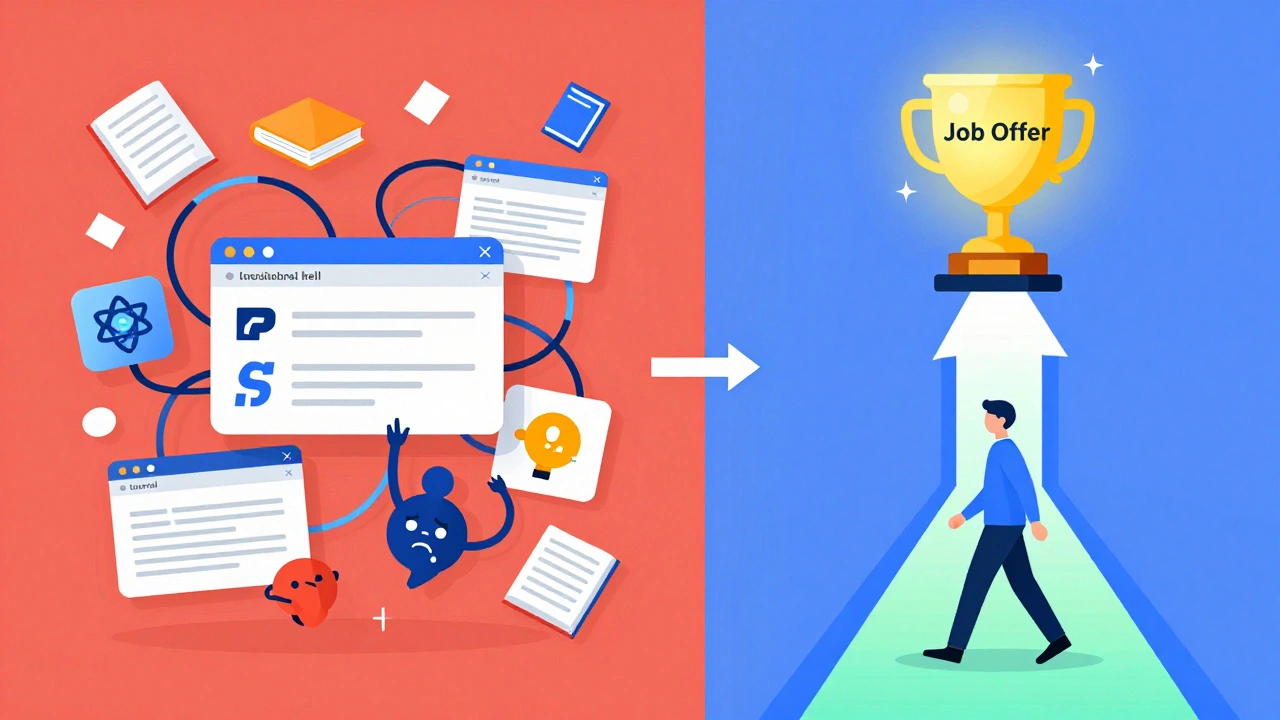
Here is the trap many adults fall into: they try to learn everything. They buy a book on Java, then watch a video on React, then read a blog post about DevOps. Within two weeks, they are overwhelmed and quit. This is called "tutorial hell." You are consuming content without producing anything.
To avoid this, you must pick one stack. Just one. Stick with it for six months. Do not jump ship when things get hard. Hard is where the learning happens.
Choosing Your Path: Bootcamps vs. Self-Study
This is the biggest decision you will face. How do you actually learn the skills? There are two main roads, and both have pros and cons for someone in their mid-thirties.
| Factor | Coding Bootcamp | Self-Study (Online) |
|---|---|---|
| Cost | $10,000 - $20,000 USD | $50 - $500 USD (platforms like Udemy, Coursera) |
| Time Commitment | Full-time (12-16 weeks) or Part-time (6-9 months) | Flexible, but requires high self-discipline |
| Structure | High. Curriculum is set. Deadlines are enforced. | Low. You decide what to learn and when. |
| Networking | Strong peer group and career services. | Weak. You must seek out communities yourself. |
| Risk | Financial risk if you don't land a job. | Time risk if you lose motivation. |
If you have the savings and need structure, a Coding Bootcamp is an intensive educational program designed to teach web development skills in a short period. is worth considering. Look for programs with income share agreements (ISAs), where you pay nothing upfront and only repay when you get hired. This aligns the school’s incentives with yours.
If you are tight on cash or have a chaotic schedule, self-study is viable. But you must treat it like a second job. Block out two hours every night. No excuses. Use platforms like freeCodeCamp or The Odin Project. These are free, structured, and respected in the industry.
The Technical Stack: What Should You Learn?
Don’t learn Assembly. Don’t learn COBOL (unless you want to work in banking legacy systems). You need marketable skills. In 2026, the demand remains strong for full-stack JavaScript developers and data engineers.
Here is a practical roadmap for a beginner:
- HTML/CSS: The skeleton and skin of the web. Learn this in two weeks. Build a personal portfolio site.
- JavaScript: The brain of the web. This is where the logic lives. Spend three months here. Master variables, functions, loops, and DOM manipulation.
- React: The most popular frontend library. Learn how to build interactive user interfaces. This is crucial for getting hired.
- Node.js: Allows you to run JavaScript on the server. This makes you a "full-stack" developer.
- Git: Version control. Every team uses Git. If you don’t know Git, you cannot work in a team. Period.
Notice I didn’t mention Python or Java. While those are great languages, the barrier to entry for JavaScript is lower, and the job market for frontend/full-stack roles is broader for juniors. Once you have one job under your belt, you can learn other languages on the job.
Building a Portfolio That Gets You Hired
Your degree doesn’t matter as much as your GitHub profile. Recruiters want to see code. They want to see projects that solve real problems.
Avoid the clichés. Do not build another To-Do List app. Do not build a Weather App that just fetches data from an API. Everyone does these. They prove nothing.
Instead, build projects that leverage your past experience. Were you a teacher? Build a platform for students to track grades. Were you in logistics? Build a dashboard for tracking shipments. This shows potential employers that you can apply coding to business contexts.
Make sure your code is clean. Comment it well. Write a README file that explains how to install and run your project. If a recruiter can’t run your code in five minutes, they will move on to the next candidate.

Navigating the Job Market as a Career Changer
Applying for jobs is a numbers game. You will send out hundreds of resumes. You will hear silence. You will get rejected. This is normal. Even senior developers face rejection.
Here is how to stand out:
- Network locally: Attend meetups in Auckland or wherever you live. Talk to people. Ask for advice, not jobs. People love helping those who are curious.
- Leverage your existing network: Tell everyone you know you are looking for a tech role. Your former boss might know a company that needs a junior dev who understands their industry.
- Target small companies: Startups and small agencies are more willing to take a chance on a non-traditional candidate. They value versatility and hustle over pedigree.
- Freelance: Take small gigs on Upwork or Fiverr. Fix bugs for local businesses. Build websites for friends. Real-world experience counts.
Ageism exists, but it is often masked as "culture fit." Counter this by demonstrating cultural add. Show that you are adaptable, eager to learn, and reliable. Highlight your maturity. You show up on time. You communicate clearly. You don’t throw tantrums when code breaks.
Maintaining Momentum: Avoiding Burnout
Learning to code is a marathon, not a sprint. If you burn out in month three, you’ll never finish. Protect your energy.
Set realistic goals. Aim for one hour of focused study per day, not eight hours once a week. Consistency beats intensity. Take breaks. Exercise. Sleep. Your brain consolidates learning while you rest.
Find a community. Join Discord servers, Reddit forums, or local coding groups. Having peers to talk to keeps you accountable. When you’re stuck on a bug, asking a friend often leads to a faster solution than searching Stack Overflow alone.
Remember why you started. Was it financial freedom? Creative expression? Intellectual challenge? Keep that vision alive. On the days you want to quit, remind yourself of the payoff.
Final Thoughts: Your Age Is Your Advantage
Is it too late to learn coding at 35? Absolutely not. In fact, you might be at the perfect age. You have the discipline to stick with it. You have the life experience to understand the bigger picture. You have the soft skills to collaborate effectively.
The tech industry needs diverse perspectives. It needs people who have lived outside the bubble of computer science. It needs problem solvers who bring unique insights from other fields.
Start today. Not tomorrow. Today. Pick a language. Build a project. Share your code. The journey will be tough, but the reward-a career that offers flexibility, creativity, and growth-is worth it. You haven’t missed the boat. You’re just boarding now.
Can I get a job in tech without a computer science degree?
Yes. Many top tech companies, including Google and Apple, have dropped degree requirements for many roles. Employers prioritize demonstrable skills, portfolios, and problem-solving abilities over formal education. Bootcamps, self-study, and freelance experience are valid pathways.
How long does it take to become employable?
For a dedicated learner studying 15-20 hours a week, it typically takes 6-12 months to reach a junior developer level. Full-time bootcamp students may be ready in 3-6 months. However, landing the first job can take an additional 3-6 months of active job hunting.
What is the salary expectation for a junior developer at 35?
Salaries vary by location. In New Zealand, a junior developer might earn between NZD $60,000 and $80,000 annually. In the US, ranges from $70,000 to $100,000+ depending on the city. While this may be lower than your previous salary in another field, tech salaries tend to grow rapidly with experience.
Should I learn AI or Machine Learning instead?
Not initially. AI and ML roles typically require advanced mathematics and often master's degrees. Start with web development or software engineering to build a solid foundation in coding logic and algorithms. You can pivot to AI later once you have professional experience.
Is remote work available for beginners?
Remote work is common in tech, but junior roles often require some on-site presence for mentorship and collaboration. Hybrid models are popular. Be open to relocating or working in-office initially to gain experience, then transition to fully remote roles after 1-2 years.
