
If you’re trying to get better at speaking English, apps can be your best friend. But not all apps are created equal. Some just quiz you on vocabulary. Others play back your voice and say ‘good job’ without ever correcting you. The truth? You need something that pushes you to talk, listens closely, and gives you real feedback - not just stars and badges.
Why most English apps fail at speaking practice
Most language apps treat speaking like a checkbox. You tap ‘record’, say ‘My name is Maria’, and the app says ‘Perfect!’ even if your pronunciation sounds like ‘My naym iz Mah-ree-ah’ with a heavy accent. That’s not learning. That’s self-deception.
Real speaking practice means being misunderstood sometimes. It means getting interrupted. It means having to rephrase when someone doesn’t get you. That’s what happens in real life - and that’s what you need to train for.
Apps that just play audio clips or flashcards don’t build fluency. They build confidence in a bubble. The apps that actually work are the ones that connect you to real people, or at least AI that mimics real conversation - with corrections, pacing, and natural flow.
Best app for real-time speaking practice: Tandem
Tandem connects you with native English speakers who want to learn your language. You talk for 20 minutes in English, then 20 minutes in their language. No scripts. No pre-written answers. Just real talk.
Here’s how it works: You find someone in London, Toronto, or Sydney. You start a voice call. They correct your grammar on the spot. You point out their mistakes in Spanish or Mandarin. It’s messy. It’s awkward. And it works.
Unlike Duolingo, Tandem doesn’t grade you. It doesn’t give you points. It just lets you speak - and learn from someone who actually uses English every day. The best part? You’re helping someone else too. That’s why people stick with it.
Over 60% of Tandem users report noticeable improvement in speaking within 30 days. Not because of fancy tech - because they’re forced to think on their feet.
Best AI-powered speaking coach: ELSA Speak
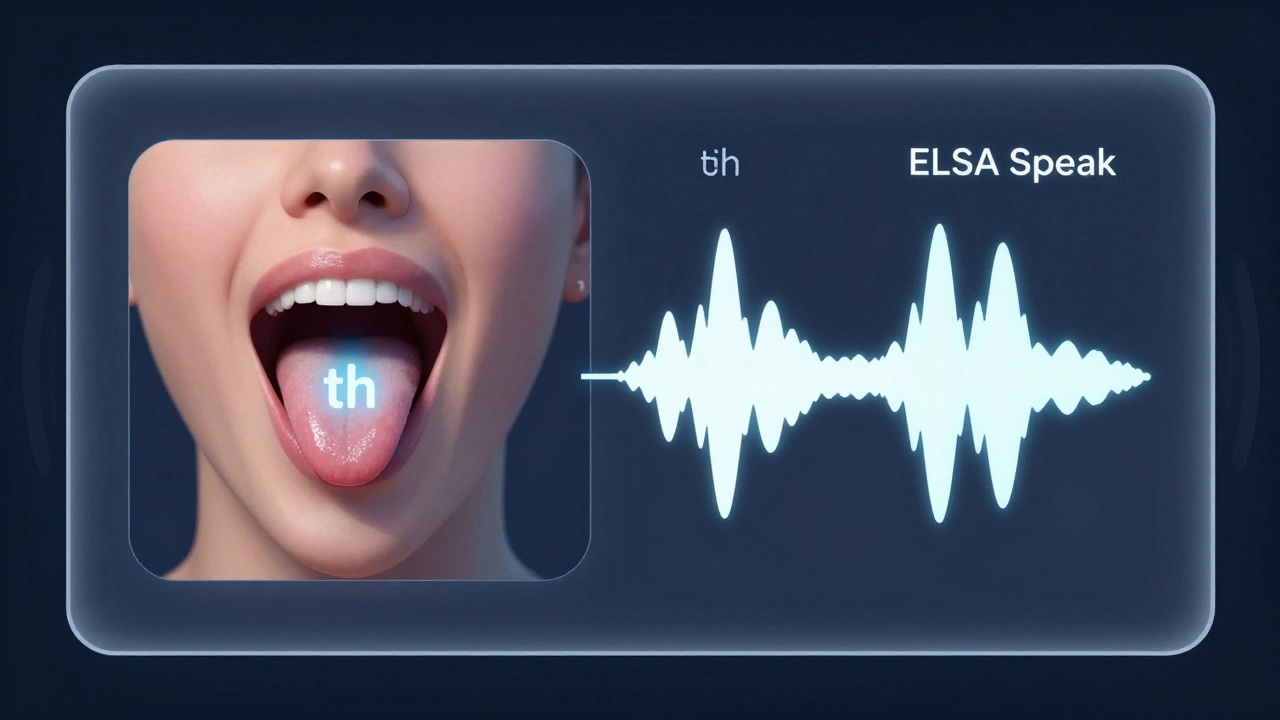
If you don’t have time to find a language partner, or you’re too shy to talk to strangers, ELSA Speak is your next best option. It uses AI to analyze your pronunciation down to the phoneme level.
Let’s say you say ‘think’ like ‘sink’. ELSA doesn’t just say ‘wrong’. It shows you a visual waveform of your voice, compares it to a native speaker’s, and tells you exactly where your tongue should go. It even gives you exercises for specific sounds - like the ‘th’ in ‘this’ or the ‘r’ in ‘car’.
It’s not just for beginners. I’ve seen advanced learners use ELSA to drop their accent in professional settings. One user from Jakarta improved her clarity so much that she got promoted at her international company after just 8 weeks of daily 10-minute sessions.
ELSA works best when you use it like a coach - not a game. Do one exercise every morning. Record yourself answering a question. Then listen back. Notice the gaps. Fix them.
Best for structured conversations: Cambly
Cambly is like hiring a private English tutor - but you pay by the minute and never have to schedule ahead. You open the app, pick a tutor from a list, and start talking within 30 seconds.
Tutors are real people - teachers, professionals, retired professors - from the U.S., Canada, Australia, and the UK. They don’t give you worksheets. They ask you questions: ‘What’s something you’re proud of this week?’ ‘Why do you think people move abroad?’
You answer. They listen. They correct. They push you to expand your answers. ‘Can you say that again with more detail?’ ‘What do you mean by ‘kind of’?’ That’s the kind of feedback you won’t get anywhere else.
It’s not cheap - $7-$10 per session - but if you do two sessions a week, you’ll see faster progress than in a 6-month classroom course. And unlike group classes, you’re the only one speaking. No waiting. No silence. Just talk.
Best free option: HelloTalk
If you’re on a budget, HelloTalk is the most powerful free app for speaking practice. It works like Tandem - you connect with native speakers - but it adds voice messaging and text correction tools.
Record a 30-second voice note: ‘I went to the market yesterday and bought some apples.’ Send it. Someone in New York replies with a voice note back: ‘Nice! You said ‘bought’ correctly - but try saying ‘the market’ with less pause.’
It’s not live, but it’s real. And because you’re sending short clips, it’s low-pressure. You can record 10 times before you send the best one. That’s how confidence builds.
Over 3 million people use HelloTalk. Most are between 18 and 35. Many are working professionals trying to improve for interviews or promotions. The community is active, friendly, and full of people who want to help.
What to avoid: Duolingo, Memrise, Busuu
These apps are great for vocabulary. But they’re terrible for speaking. Duolingo’s ‘speak’ feature is a joke. It asks you to repeat phrases like ‘I drink coffee’ while playing a robotic voice. No context. No follow-up. No correction.
Memrise uses videos of native speakers - but you don’t talk back. Busuu gives you grammar feedback on writing - not speaking. None of them simulate real conversation.
If you’re using one of these apps and feel like you’re stuck at ‘basic’, it’s not you. It’s the app. They’re designed for passive learning. You need active practice.
How to choose the right app for you
Ask yourself these three questions:
- Do you want human feedback or AI feedback? If you crave real human interaction, go with Tandem or Cambly. If you want instant, detailed pronunciation help, pick ELSA.
- How much time do you have daily? If you only have 10 minutes, ELSA or HelloTalk work best. If you can spare 30 minutes twice a week, Cambly is worth the cost.
- Are you preparing for something specific? Job interview? Academic presentation? Travel? Cambly lets you pick tutors who specialize in those areas. ELSA has modules for business English and IELTS speaking.
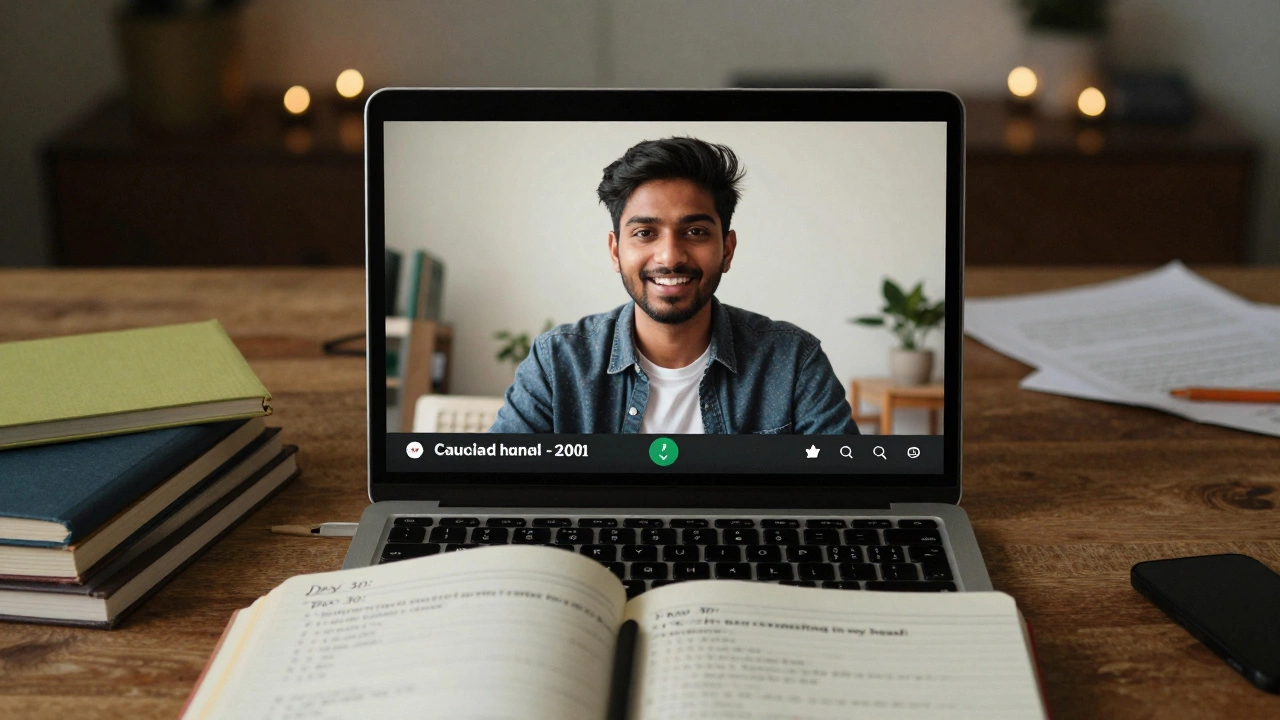
Don’t switch apps every week. Pick one, stick with it for 30 days, and track your progress. Record yourself answering the same question on Day 1 and Day 30. Listen back. You’ll hear the difference.
Pro tip: Combine apps for fastest results
The fastest learners don’t use just one app. They stack them.
Here’s a real routine from a user in Manila who went from B1 to C1 in 5 months:
- Mornings: 10 minutes with ELSA to fix pronunciation
- Lunch: 15-minute voice message on HelloTalk
- Evenings: One 20-minute Cambly session with a tutor from Canada
That’s less than an hour a day. But because each app does something different - correction, real-time feedback, and conversation - the results compound.
You don’t need to do all three. But if you combine at least two - say, ELSA + Tandem - you’ll outperform 90% of people who rely on one app alone.
What success looks like after 30 days
After 30 days of consistent practice, you should notice:
- You don’t pause to translate in your head before speaking
- You understand native speakers faster, even with accents
- You can correct yourself mid-sentence - ‘Wait, I mean…’
- You’re not afraid to say ‘I don’t know’ or ‘Can you repeat that?’
That’s not fluency. But it’s confidence. And confidence is what gets you through the first awkward conversation - the one that leads to the next, and the next, until speaking English feels natural.
Final thought: It’s not about the app - it’s about the habit
The best app in the world won’t help if you only open it once a week. Progress comes from consistency, not perfection.
Start small. Talk for 5 minutes a day. Don’t wait until you’re ready. You’ll never be ready. You get better by doing - not by studying.
Open your app. Hit record. Say something - anything. Even if it’s wrong. Even if it’s messy. That’s the first step to speaking English like you mean it.
Is it better to practice with AI or real people?
Both have strengths. AI (like ELSA) gives instant, detailed feedback on pronunciation and grammar. Real people (on Tandem or Cambly) teach you how English flows in real conversations - including interruptions, slang, and tone. For fastest results, use both: AI to fix your sounds, real people to practice natural speech.
Can I become fluent using only apps?
You can get very close to fluency - especially in speaking - using only apps. But true fluency includes understanding cultural context, humor, and unspoken rules. Apps can’t fully teach that. Still, if your goal is to speak clearly in work or travel situations, apps are more than enough. Many professionals reach B2-C1 levels using just Cambly and ELSA.
Which app is best for non-native speakers with strong accents?
ELSA Speak is the most effective for reducing accents. It breaks down each sound you struggle with and gives you targeted drills. For example, if you’re from Japan and mix up ‘l’ and ‘r’, ELSA will isolate those sounds and show you exactly how your mouth should move. Combine it with daily speaking practice on Tandem to hear how native speakers say those same words in context.
Are paid apps worth it over free ones?
Yes - if you’re serious. Free apps like HelloTalk and Tandem’s basic plan are great to start. But paid apps like Cambly and ELSA Pro give you real-time feedback, structured lessons, and access to certified tutors. If you’re preparing for a job interview or academic program, spending $10-$20 a month can save you months of frustration. The return on investment is high.
How often should I practice speaking?
At least 5 days a week. Even 10 minutes a day beats one hour once a week. Speaking is a muscle. It needs regular use. Try to speak every morning - even if it’s just talking to yourself in the mirror. The goal isn’t perfection. It’s consistency. The more you do it, the less you’ll fear making mistakes.
Next steps: Start today
Don’t wait for the perfect app. Don’t wait until you feel ready. Open one of the apps mentioned here - Tandem, ELSA, or HelloTalk - right now. Find one person to talk to. Record one short message. Send it. That’s it. You’ve started.
The next 30 days will be harder than you think. But they’ll also be the most rewarding. Because every time you speak, even badly, you’re building something no app can take away: your voice in English.
