JEE Mains Book Selection Optimizer
Assess Your Current Level
Personalized Strategy
Based on your preparation level and weak areas, here's your optimized book selection:
Preparing for JEE Mains isn’t just about studying harder-it’s about studying smarter. With over 1.5 million students taking the exam every year, the competition is fierce. And the right books? They make all the difference. You don’t need 20 different guides. You need a few solid ones that actually explain concepts, give real practice, and mirror the exam pattern. Let’s cut through the noise and show you exactly which books work-and which ones just collect dust.
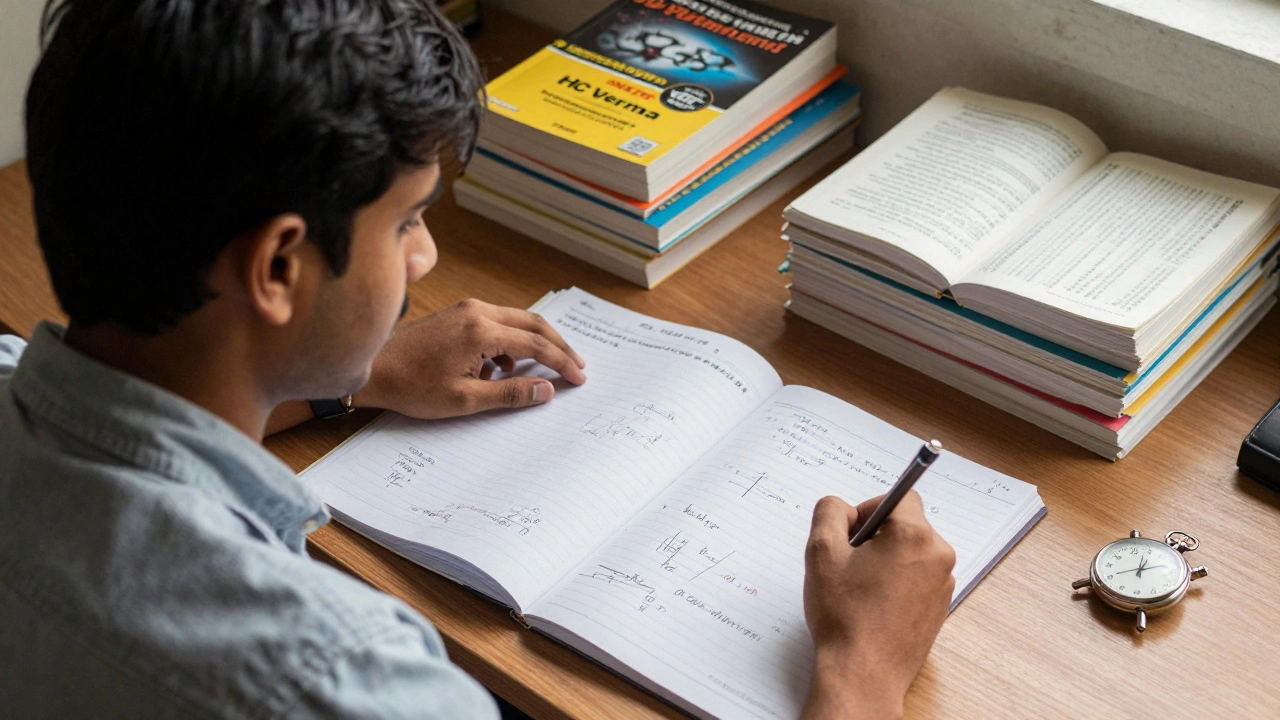
Physics: Start with HC Verma
If you’re serious about physics for JEE Mains, HC Verma’s Concepts of Physics is a two-volume set that builds conceptual clarity from the ground up. It’s been the go-to resource for over two decades because it doesn’t just dump formulas-it makes you think. The problems are graded from basic to challenging, and the explanations are clear enough that you won’t need a tutor for most topics. Don’t skip the solved examples. They’re not filler-they’re training.
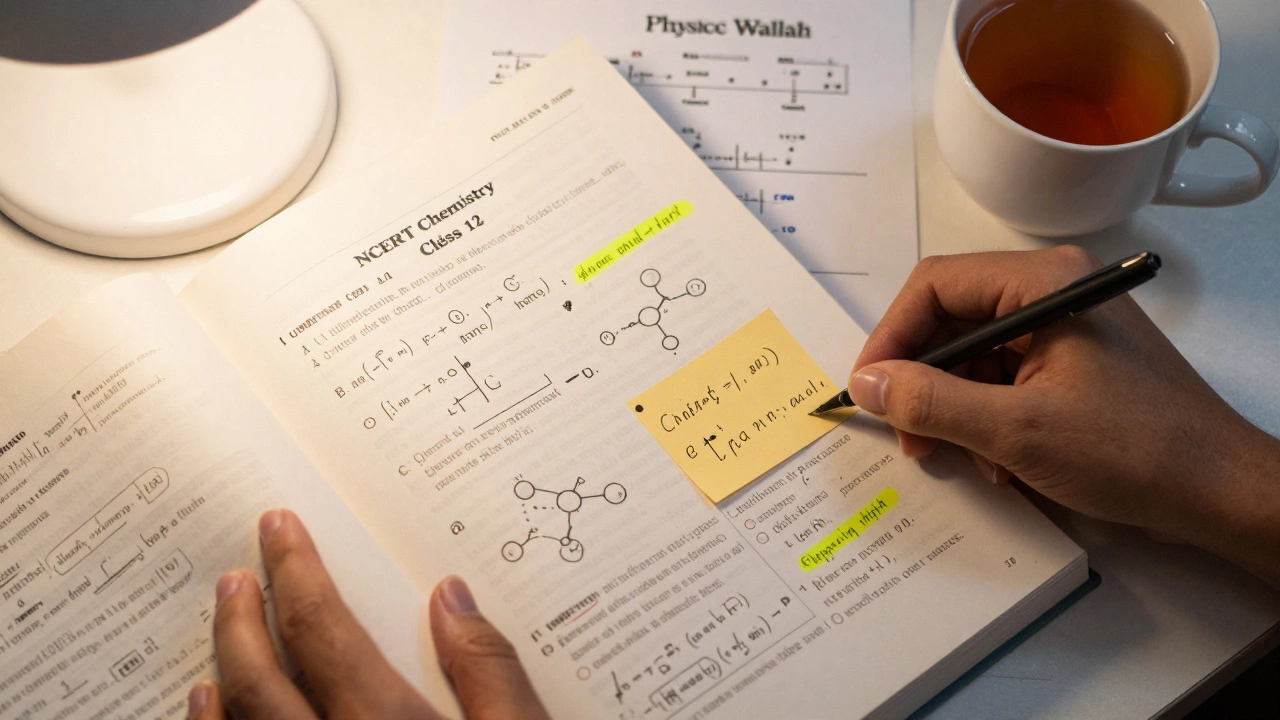
For practice after HC Verma, use NCERT Physics (Class 11 and 12). Yes, the school textbook. It’s that important. Over 60% of JEE Mains physics questions come directly or indirectly from NCERT. If you can solve every question in NCERT-including the back exercises-you’ve already covered half the battle.
Chemistry: NCERT Is Non-Negotiable
Chemistry is the easiest subject to score high in-if you know where to focus. And that’s NCERT Chemistry (Class 11 and 12). Seriously. Don’t buy 10 different chemistry books. Just master NCERT. Every single line. Every reaction. Every diagram. The exam setters pull questions straight from these pages. In 2025, 23 out of 30 chemistry questions in JEE Mains were directly based on NCERT content.
For organic chemistry, add Morrison and Boyd’s Organic Chemistry if you’re aiming for top ranks. It’s detailed, but you don’t need to read it cover to cover. Use it to understand mechanisms, not memorize them. For inorganic, stick with NCERT and supplement with JD Lee’s Concise Inorganic Chemistry for quick revision of periodic trends and coordination compounds.
Mathematics: Rely on RD Sharma and Cengage
Math is where most students lose time. It’s not about solving hard problems-it’s about solving them fast and accurately. Start with RD Sharma Class 11 and 12. It’s thick, yes, but it covers every type of problem you’ll see on JEE Mains. Do the exercises. Don’t just glance at them. The book builds your speed and accuracy.
Once you’re solid on basics, switch to Cengage Mathematics Series by G. Tewani. This is where you level up. The book breaks down topics into subtopics with graded difficulty. The JEE Mains-level problems are clearly marked. You’ll find questions that mimic the actual exam’s style-short, tricky, and time-sensitive.
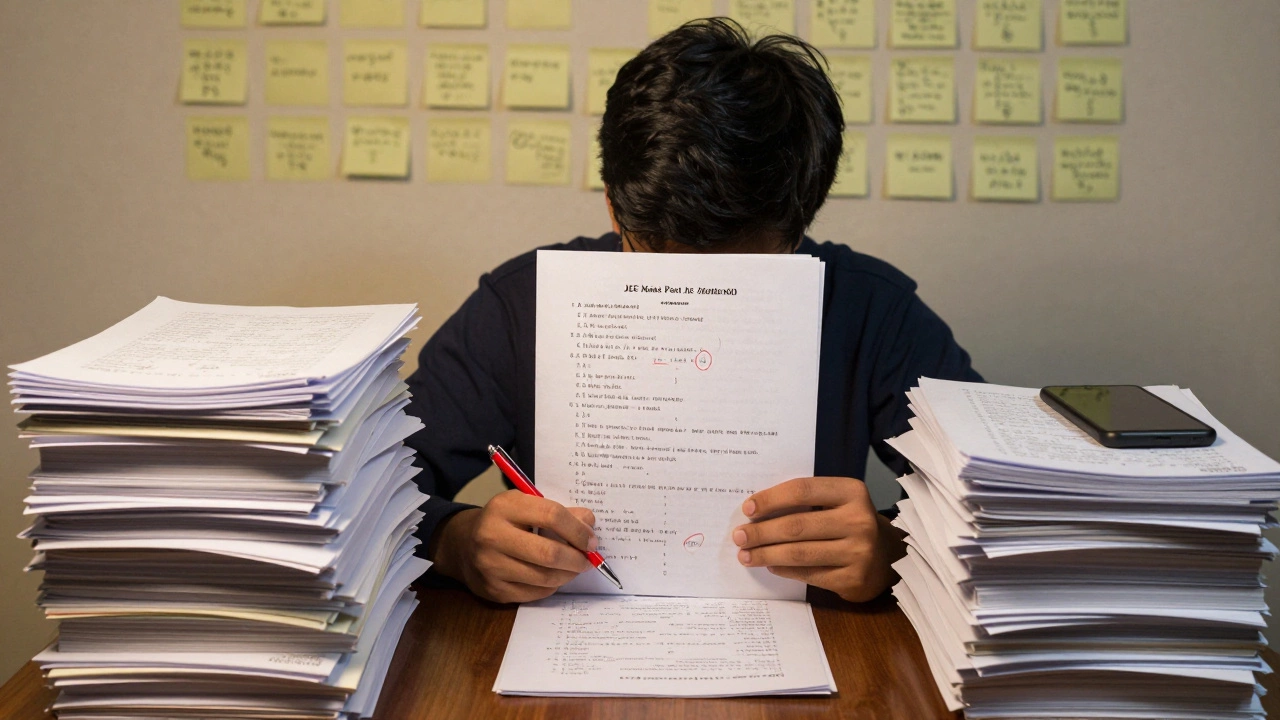
Don’t forget Previous Years’ JEE Mains Papers. The NTA releases past papers. Solve at least the last 10 years. It’s the best way to understand what’s trending-like how many questions now focus on application-based calculus or probability in real-world contexts.
What Not to Do
Stop buying books just because someone on YouTube says so. You don’t need Arihant’s 1000+ page monster for every subject. You don’t need 5 different coaching modules. You don’t need 3 different sets of mock papers from different publishers. That’s clutter, not strategy.
Here’s what actually works: one strong concept book per subject, NCERT as your bible, and past papers as your final test. That’s it. No more. No less.
How to Use These Books Effectively
- Read the theory once. Don’t reread. Move to problems.
- Solve every example in HC Verma and RD Sharma. Don’t skip.
- Mark questions you get wrong. Revisit them after a week.
- Time yourself on NCERT exercises. Aim for 2 minutes per question.
- Do one full past paper every weekend. No phone. No breaks.
Progress isn’t measured by how many books you finish. It’s measured by how many problems you can solve without looking at the solution.
Supplemental Tools
Books alone won’t get you to the top 1000. You need testing. Use the NTA Abhyas App-it’s free, official, and gives you real JEE Mains-style tests. Track your accuracy and speed. If your speed in math is under 1.5 minutes per question, you’re behind.
For quick revision, use Formula Sheets from Physics Wallah or Unacademy. Print them. Stick them on your wall. Review them daily for 10 minutes. Don’t memorize-internalize.
Final Reality Check
Top scorers don’t have more books. They have better habits. They know their NCERT inside out. They’ve solved HC Verma twice. They’ve timed themselves on 50+ past papers. They don’t chase new material-they master what they have.
So if you’re asking, "Which is the best book?"-the real answer is: the one you finish.
Are coaching books better than NCERT for JEE Mains?
No. NCERT is the foundation. Coaching books like Arihant or Cengage are for practice and deeper understanding, but if you can’t answer NCERT questions confidently, you won’t crack JEE Mains. Over 60% of questions in the last three years came directly from NCERT. Skip NCERT, and you’re gambling.
Can I rely only on online videos instead of books?
Videos are great for learning, but not enough for mastery. You need to write. You need to solve. You need to make mistakes and fix them on paper. Books force you to think without distractions. Videos help you understand; books help you remember and apply.
How many books should I use for each subject?
One concept book (like HC Verma or RD Sharma), one NCERT, and one practice book (like Cengage). That’s three per subject. More than that just creates confusion. Focus on depth, not quantity.
Is solving past papers really that important?
Yes. The NTA repeats concepts, patterns, and even question styles. Solving the last 10 years helps you spot trends-like how many questions now test dimensional analysis in physics or reaction mechanisms in organic chemistry. It’s the best predictor of what’s coming.
What if I’m weak in one subject-should I focus only on that?
No. JEE Mains is an aggregate exam. You need balanced scores. If you’re weak in chemistry, don’t drop physics or math. Instead, spend 70% of your time on your weak area, but keep practicing the others daily. A 70/30 split works better than going all-in on one subject.
What Comes Next
Once you’ve mastered these books, move to full mock tests under exam conditions. Track your weak chapters. Revise them. Repeat. The goal isn’t to finish every book-it’s to be able to solve any JEE Mains question in under 90 seconds, without hesitation.
The right books, used the right way, are all you need. No magic. No shortcuts. Just consistency.
