
Daily English Speaking Practice Tracker
Record Your Practice
Your Progress
Want to speak English but don’t know where to start? You don’t need a classroom, a tutor, or expensive courses. Millions of people have learned to speak English on their own-using free tools, everyday habits, and simple strategies. The key isn’t memorizing grammar rules. It’s speaking. Not just reading or listening. Actually talking. Out loud. Every day.
Start Speaking Even If You’re Bad
Most people wait until they feel "ready" to speak. That’s the trap. You’ll never feel ready. English learners often spend years studying verbs and vocabulary, then freeze when someone asks, "How was your weekend?" The truth? You don’t need to be perfect to start talking. You just need to open your mouth.
Try this: Every morning, say three things out loud before you check your phone. "I’m going to make coffee." "I need to finish my report." "Today will be better than yesterday." It sounds silly, but it trains your mouth to form sounds in English. Your brain doesn’t care if you say "I goed" instead of "I went." It cares that you’re making noise. That’s the first step.
Listen Like a Detective
You can’t speak well if you don’t hear how native speakers talk. But watching Netflix with subtitles won’t cut it. You need to listen like you’re solving a puzzle.
Pick one short video every day-maybe a 5-minute YouTube clip from a YouTuber like "English Addict with Mr Steve" or "Learn English with Emma." Watch it once with subtitles. Then watch it again without. Pause. Rewind. Say the lines out loud after them. Copy their rhythm. Their pauses. The way they drop words like "I’m gonna" instead of "I am going to."
Why does this work? Because spoken English isn’t textbook English. People don’t say, "I have been working" all the time. They say, "I’ve been working." Or even, "Been workin’." You need to train your ears to hear the real version.
Use Shadowing to Build Muscle Memory
Shadowing is a technique used by professional interpreters. Here’s how to do it:
- Find a 30-second audio clip of someone speaking clearly (podcasts like "6-Minute English" work well).
- Play it once.
- Play it again, and speak along with the speaker-right as they speak. Don’t wait. Don’t think. Just try to match their speed and tone.
- Do this 3 times in a row.
You’ll sound like a robot at first. Maybe even ridiculous. But after a week, your mouth will start moving differently. Your tongue will learn where to place itself. Your jaw will relax. You’ll stop translating word-for-word from your native language. That’s when fluency begins.
Talk to Yourself-Seriously
Yes, you read that right. Talk to yourself. While brushing your teeth. While walking to the bus stop. While cooking dinner. Describe what you’re doing in English.
"I’m cutting the onions. They smell strong. I hope I don’t cry this time."
"The microwave just beeped. My food is ready. I’ll eat it fast before it gets cold."
This isn’t practice. This is survival. Your brain starts thinking in English when you use it to describe real life. No grammar police. No fear of mistakes. Just you and your thoughts.
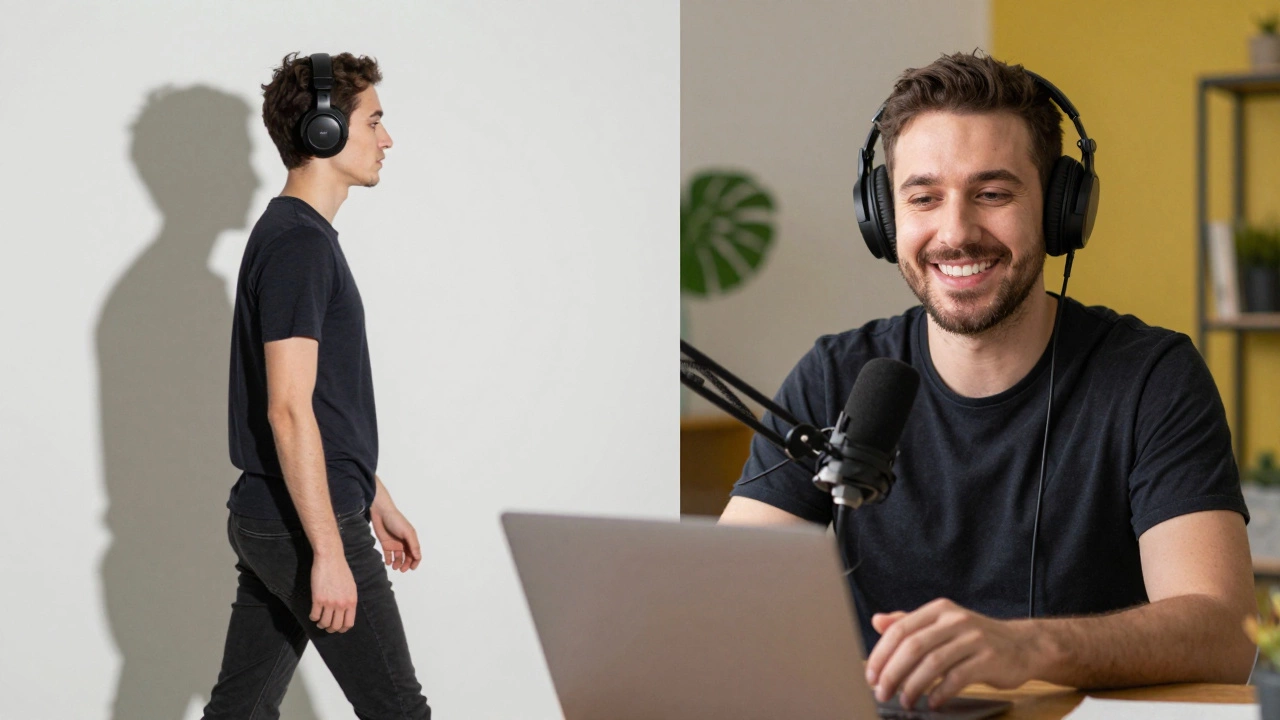
Find Your Speaking Partner (Even Online)
You don’t need to fly to London. You don’t need to pay $50/hour for a tutor. Free options exist.
Apps like HiNative is a platform where native speakers answer questions from language learners let you send voice messages and get feedback from real people. Try asking: "How would you say this in English?" Then listen to how they reply.
Or join a Conversation Exchange is a free online community that connects language learners for mutual practice group. Find someone learning your language. You speak English for 15 minutes. They speak your language for 15 minutes. No pressure. Just real talk.
One woman from Brazil started talking to a retired teacher in Canada every Tuesday. She didn’t know his name. He didn’t know hers. But after six months, she passed her IELTS speaking test with a 7.5. All because she showed up, week after week.
Record Yourself-Then Listen
Recording yourself is uncomfortable. But it’s the fastest way to see your progress.
Use your phone. Ask yourself: "What did I do today?" Record a 60-second answer. Play it back. Don’t cringe. Just notice.
Do you say "um" every three words? Do you pause before every verb? Do you speak too fast and mumble? These aren’t flaws-they’re clues. You can fix them. One at a time.
Do this once a week. After three months, listen to your first recording. You’ll laugh. Then you’ll realize-you’ve changed.
Think in English, Not in Translation
Most learners think in their native language, then translate. That’s why speaking feels slow and heavy.
Start replacing simple thoughts with English words.
- Instead of thinking, "I’m hungry," think, "I need food."
- Instead of "This movie is boring," think, "I’m not into this."
- Instead of "I don’t understand," think, "What does that mean?"
Use sticky notes. Write "I’m tired" on your mirror. Write "I’m late" on your laptop. Write "I like this" on your coffee mug. See them. Say them. Live them.
After a few weeks, you’ll catch yourself thinking in English without trying.
Make Mistakes on Purpose
Here’s a secret: Native speakers don’t care if you mess up. They care if you try.
Next time you’re in a conversation, say something wrong on purpose. "I goed to the store." "She have three cats." Then laugh and say, "I know that’s wrong. Can you help me?"
You’ll be surprised. People love helping. They’ll say, "You mean you went?" And suddenly, you’ve learned something real. Not from a book. From a human.
Mistakes aren’t failures. They’re invitations to learn.
Track Your Progress-Not Perfection
Fluency isn’t about knowing 10,000 words. It’s about speaking without panic.
Keep a simple log:
- Day 1: I spoke for 2 minutes to myself.
- Day 7: I asked a question on HiNative and got a reply.
- Day 30: I watched a video without subtitles and understood 70%.
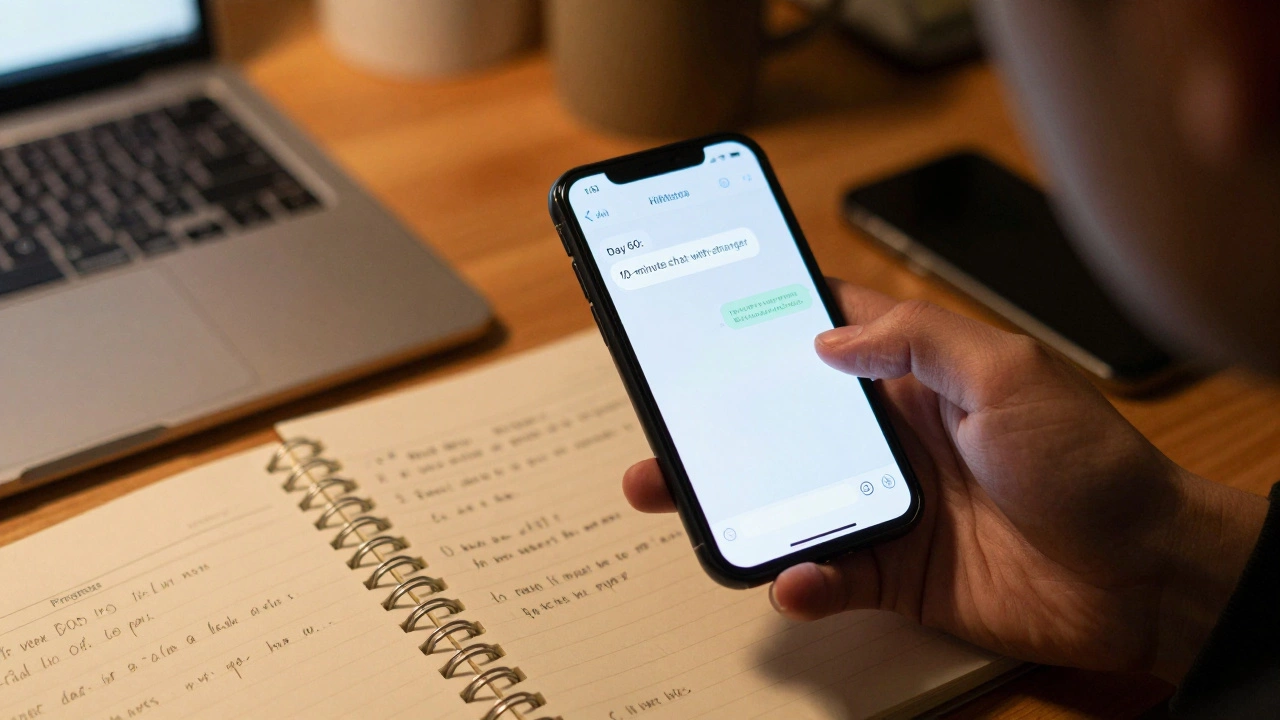
- Day 60: I had a 10-minute chat with a stranger online.
That’s progress. Not perfection. Celebrate it. Every single win matters.
What to Avoid
Don’t spend hours memorizing lists of vocabulary. You’ll forget them.
Don’t wait for "perfect" grammar. You’ll never start.
Don’t compare yourself to others. Someone who speaks fluently today started exactly where you are.
Don’t rely on apps that only test you. You need to produce language-not just recognize it.
Final Rule: Speak Every Day
There’s no magic formula. No secret course. No app that will make you fluent overnight.
There’s only one rule: Speak every day. Even for five minutes. Even if you’re alone. Even if you’re scared.
Because fluency isn’t a destination. It’s a habit. And habits are built one awkward sentence at a time.
Can I really learn to speak English without a teacher?
Yes. Thousands of people have done it. You don’t need a teacher to speak-you need practice. Teachers help with feedback and structure, but you can build both on your own using free resources like podcasts, YouTube, language exchange apps, and self-recording. The key is consistency, not instruction.
How long does it take to become fluent in spoken English?
There’s no fixed timeline, but most people who speak daily for 15-30 minutes see noticeable improvement in 3-6 months. Fluency-meaning you can hold a conversation without freezing-usually takes 6-12 months of consistent practice. It depends on how much you speak, not how much you study.
What’s the best free resource to practice speaking?
The best free resource is real conversation. Use apps like HiNative or Conversation Exchange to connect with native speakers. For listening and shadowing, try the "6-Minute English" podcast from the BBC. Combine those with daily self-talk and recording, and you’ll build skills faster than any paid course.
I’m too shy to speak. What should I do?
Start by speaking to yourself. Talk out loud while doing chores. Record yourself. Then try one low-pressure interaction: send a voice message to a language partner on HiNative. Say, "I’m practicing. Can you tell me if this sounds natural?" Most people will help. Shyness fades when you realize no one is judging you as harshly as you judge yourself.
Should I focus on grammar or speaking first?
Speak first. Grammar follows. You don’t need to know the past perfect tense to say, "I went to the market." Focus on being understood, not being perfect. As you speak more, your brain naturally starts correcting itself. Grammar rules become clearer when you’ve heard them in real use-not just in a textbook.
