Online Class Platform Finder
Not sure which platform fits your needs? Answer these three questions to find the right tool for teaching or learning.
You probably think you know the answer. You might guess Coursera or maybe Udemy. But if you ask a university professor in Auckland, a corporate trainer in London, or a high school student in New York, you’ll get three completely different answers. Why? Because "online classes" isn’t one thing. It’s a messy mix of live video calls, self-paced video courses, and complex learning management systems (LMS). There is no single winner because the "best" platform depends entirely on whether you’re teaching a live cohort, selling pre-recorded videos, or managing a semester-long curriculum.
Let’s cut through the noise. If we look at raw user numbers, Zoom remains the undisputed king of synchronous online classes. With over 300 million daily meeting participants as of recent reports, it’s where most real-time teaching happens. But if you’re looking for platforms that host the actual course content, assignments, and grading, Canvas dominates higher education, while Google Classroom owns K-12. For independent creators selling skills, Udemy still holds the largest catalog volume, though Coursera leads in accredited university partnerships.
The Big Three: Who Actually Holds the Crown?
To understand who is "most used," you have to define what you mean by usage. Are we talking about traffic? Number of active students? Or number of institutions paying for licenses? The data tells a nuanced story.
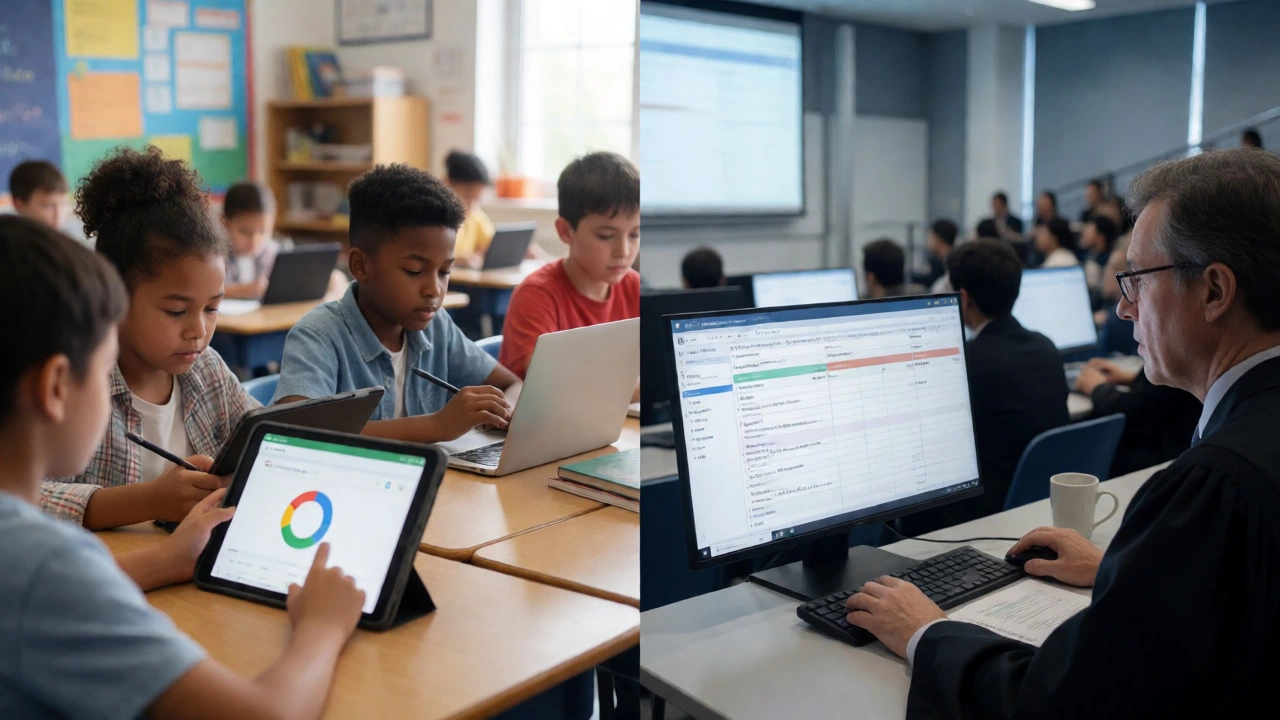
Google Classroom is technically the most widely deployed platform globally. It’s free for schools using Google Workspace for Education, which makes it an easy default for millions of teachers from primary school through high school. Its simplicity is its superpower. You don’t need training to use it; you just need a Gmail account. However, calling it the "best" for serious online classes is misleading. It lacks robust grading tools, advanced analytics, and scalability for large universities.
In contrast, Canvas is the standard for universities. In North America and increasingly in Europe and Asia-Pacific, Canvas has replaced older systems like Blackboard. According to Educause data, Canvas powers a significant majority of US college enrollments. It’s not the easiest tool to learn, but it handles complex needs: group projects, plagiarism checks via Turnitin integration, and detailed gradebooks. If your definition of "online class" involves earning a degree, Canvas is likely the platform you’re logging into every week.
Then there’s the creator economy. Here, Udemy wins on sheer volume. It hosts over 200,000 courses. If you want to learn Python, Excel, or watercolor painting, Udemy is probably where you looked first. It’s a marketplace, not a school. The quality varies wildly because anyone can teach. But for casual learners wanting specific skills without academic rigor, it’s the go-to destination.
Synchronous vs. Asynchronous: The Hidden Divide
Most people conflate these two models, but they use different tech stacks. Synchronous classes happen in real-time. Asynchronous classes are self-paced.
For synchronous learning, Zoom is unavoidable. Even when schools use Canvas or Moodle, they often embed Zoom links for lectures. Why? Because Zoom’s reliability, breakout rooms, and screen-sharing features are unmatched. Microsoft Teams is catching up fast, especially in corporate training environments where Office 365 is already installed. But for pure educational focus, Zoom’s interface is cleaner for students. If you’re running live workshops, Zoom is the de facto standard.
Asynchronous platforms require different strengths. They need video hosting, progress tracking, and community forums. Coursera excels here. By partnering with Stanford, Yale, and other top-tier universities, Coursera offers structured paths with certificates. Their platform handles the heavy lifting of peer-reviewed assignments and automated quizzes. edX is similar, founded by Harvard and MIT, focusing more on open-source technology and rigorous academic standards. While edX has fewer users than Coursera, its reputation among employers for technical and scientific courses is strong.
Don’t ignore niche players like Teachable or Thinkific. These aren’t marketplaces; they’re infrastructure. Creators use them to build their own branded schools. If you’re an expert selling a $500 masterclass directly to your audience, you won’t list it on Udemy (where prices drop to $15 during sales). You’ll use Teachable. These platforms are growing rapidly as the "creator economy" matures, but they serve a different job than Coursera.

Comparison: Choosing the Right Tool for Your Job
How do you decide which platform is "most used" for *your* needs? It depends on your role. Are you a teacher, a student, or a business owner? Here’s a breakdown of the leading contenders based on key attributes.
| Platform | Primary Use Case | Best For | Cost Model | Key Strength |
|---|---|---|---|---|
| Google Classroom | K-12 & Simple Cohorts | Teachers needing quick setup | Free / Low-cost | Integration with Google Docs |
| Canvas | Higher Education | Universities & Colleges | Institutional License | Robust grading & reporting |
| Zoom | Live Lectures | Real-time interaction | Freemium / Subscription | Video stability & breakout rooms |
| Coursera | Professional Certificates | Career changers & Upskilling | Subscription / Pay-per-course | University accreditation |
| Udemy | Skill Acquisition | Hobbyists & Specific tools | Pay-per-course | Vast catalog variety |
| Moodle | Open Source Customization | Organizations with IT teams | Self-hosted / Hosting fees | Total control over data |
Notice how Moodle appears here? It’s often overlooked in consumer conversations but is massive in global markets, particularly in Europe and developing nations. Because it’s open-source, institutions can customize it endlessly. It’s less polished than Canvas, but for organizations that need specific compliance features or unique workflows, Moodle is often the only viable option.
Why "Most Used" Doesn't Mean "Best"
This is the trap many fall into. Just because Google Classroom is everywhere doesn’t mean it’s good for teaching quantum physics. Just because Udemy has the most courses doesn’t mean the instruction is high-quality. Usage metrics often reflect convenience, not effectiveness.
Consider retention rates. On Udemy, completion rates for free or low-cost courses hover around 3-10%. On Coursera, guided professional certificates see higher completion, often above 40%, because of the structured deadlines and peer accountability. If your goal is actually finishing a class and learning something, the platform with fewer users might serve you better.
Also, consider the support ecosystem. Blackboard is losing market share but still exists in many legacy institutions. If you’re a student transferring between schools, you might find yourself juggling Canvas at one place and Blackboard at another. This fragmentation is a headache for users but keeps multiple platforms relevant.
Another factor: mobile experience. In regions like Southeast Asia and Africa, mobile-first learning is dominant. Platforms like Duolingo (for languages) or mobile-optimized versions of Coursera thrive here. Desktop-centric platforms like traditional LMS interfaces struggle if the app isn’t seamless. If you’re evaluating platforms for a global audience, check their mobile app reviews before assuming desktop dominance translates to mobile success.
Emerging Trends Shaping the 2026 Landscape
The landscape isn’t static. AI is changing how we interact with these platforms. Khan Academy introduced Khanmigo, an AI tutor that guides students rather than giving answers. This shifts the platform from a content repository to an interactive coach. Similarly, Coursera and edX are integrating AI-generated summaries and personalized learning paths.
Micro-learning is also gaining traction. Instead of hour-long lectures, platforms like MasterClass offer short, high-production-value clips. While MasterClass isn’t an LMS in the traditional sense, it competes for the same attention span. Users are increasingly expecting bite-sized content, which pressures traditional platforms to break down long modules.
Finally, hybrid models are becoming the norm. Purely online degrees are common, but many universities now use platforms like Microsoft Teams for hybrid classrooms where some students are in the room and others are remote. The "platform" becomes invisible-it’s just part of the classroom infrastructure.
How to Choose Your Platform
If you’re trying to decide which platform to use or study on, ask yourself these three questions:
- Do I need a credential? If yes, stick with Coursera, edX, or university-backed platforms. Employers recognize these names. Udemy certificates carry less weight unless paired with a portfolio.
- Is this a live event or a library? For live interaction, prioritize Zoom or Teams integration. For self-study, prioritize platforms with strong search functions and offline access (like Coursera).
- Who controls the content? If you’re building a business, avoid marketplaces like Udemy where you compete on price. Use Teachable or Kajabi to keep margins high and customer relationships direct.
There is no single "most used" platform that fits all scenarios. Zoom rules the airwaves of live teaching. Google Classroom owns the K-12 hallway. Canvas runs the university registrar. And Udemy fills the gap for quick skill fixes. Understanding this segmentation helps you navigate the e-learning world without getting lost in marketing hype.
Which online learning platform has the most users?
It depends on the metric. Google Classroom has the highest number of individual student accounts due to widespread adoption in K-12 education globally. Zoom has the highest number of daily active users for live sessions. For paid professional courses, Coursera and Udemy lead in transaction volume, with Udemy having more total courses and Coursera having more enrolled learners in degree programs.
Is Coursera better than Udemy?
Not necessarily. Coursera is better for academic credentials, career transitions, and structured learning paths backed by universities. Udemy is better for acquiring specific, practical skills quickly and cheaply, such as learning a new software tool or hobby. Coursera offers certificates that often count toward degrees; Udemy certificates are generally for personal satisfaction or resume padding.
What is the difference between an LMS and an online course platform?
An LMS (Learning Management System) like Canvas or Moodle is software used by institutions to manage internal courses, grades, and students. An online course platform like Coursera or Udemy is a marketplace where instructors publish courses for the public. Institutions use LMSs to deliver their own curriculum; individuals use course platforms to buy external content.
Is Zoom considered an online class platform?
Yes, but specifically for synchronous (live) classes. Zoom provides the video conferencing infrastructure but lacks built-in features for grading, assignment submission, or long-term content storage. Most educators pair Zoom with an LMS like Canvas or Google Classroom to handle those administrative tasks.
Which platform is best for teaching coding?
For interactive coding practice, platforms like Codecademy or freeCodeCamp are popular because they allow writing code in the browser. For comprehensive computer science degrees, Coursera (via partners like Stanford or Michigan) is highly regarded. For bootcamps, platforms like General Assembly or LeetCode (for interview prep) are industry standards.
