
Coding Learning Journey Simulator
Where are you in your coding journey?
Your Learning Trajectory
Current Phase
Description goes here.
Primary Challenge: None
Tailored Advice
Remember:
"Coding gets easier not because your IQ increases, but because your pattern recognition improves."
Have you ever stared at a screen for three hours, convinced that your brain is broken because it refuses to understand why a simple loop isn't working? You are not alone. In fact, if you are asking whether coding ever gets easier, you are likely in the thick of what every developer calls "the wall." It feels like everyone else understands the magic spells of JavaScript or Python while you are still trying to figure out how to open the book.
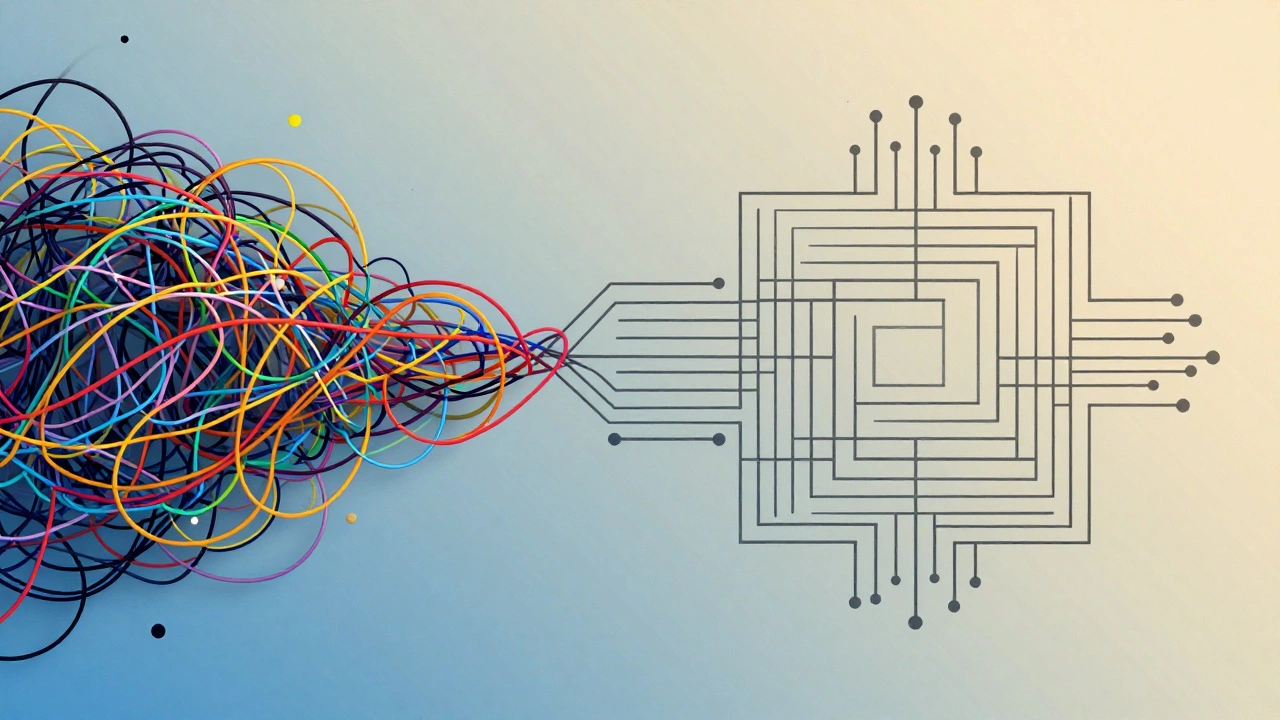
The short answer is yes. Coding absolutely gets easier. But it doesn't get easier in the way you might expect. It doesn't become effortless like riding a bike once you've learned balance. Instead, it becomes *predictable*. The chaos turns into structure. The panic turns into process. Understanding this shift is the difference between quitting after two weeks and building a career in technology.
The Myth of the "Natural" Coder
We need to bust a myth right away: there is no such thing as a natural-born coder who just "gets it" instantly. When you watch senior developers type furiously, it looks like telepathy. They seem to know exactly which library to import and how to structure the database without thinking. This creates an imposter syndrome trap for beginners taking coding classes, where they compare their day one to someone else's year ten.
In reality, experienced programmers spend about 40% of their time reading documentation, searching Stack Overflow, and debugging errors. The difference is that they have built a mental map of where to look. A beginner feels lost because they don't know what they don't know. An expert knows exactly which search terms will lead them to the solution. Coding gets easier not because your IQ increases, but because your pattern recognition improves. You start seeing the same problems over and over again, just dressed up in different variable names.
Why the First Few Months Feel Impossible
To understand why coding feels hard, we have to look at what is happening in your brain. Learning to program is not just learning a new language; it is learning a new way of thinking. This is called computational thinking. It requires you to break down vague, human problems into precise, logical steps that a machine can execute.
Imagine trying to explain to a robot how to make a sandwich. You can't just say "make a sandwich." You have to specify: pick up the bread, identify the top slice, apply mayonnaise with even pressure, place the turkey, fold the turkey, etc. If you miss one step, the robot fails. Beginners struggle because they are used to human ambiguity. Computers hate ambiguity. Every missing semicolon, every mismatched bracket, and every undefined variable is a moment where the computer stops and waits for clarity. This friction is exhausting at first, but it is also what makes coding so powerful when you master it.
Here is the breakdown of why the early stage is painful:
- Cognitive Load: Your brain is holding too many new concepts at once (syntax, logic, environment setup).
- Lack of Context: You don't yet know why you are learning a specific concept, so it feels abstract and useless.
- Error Fatigue: Constant red error messages feel like personal failures rather than helpful feedback.
The Shift: From Syntax to Logic
So, when does it click? For most people studying through structured programming courses, the shift happens around the 3-to-6-month mark. This is when you stop worrying about the spelling of commands and start focusing on the architecture of solutions.
Think of it like learning to drive. In the beginning, you are consciously thinking about "mirror, signal, maneuver." You are terrified of stalling the car. You are hyper-aware of the pedals. After six months, you are no longer thinking about the pedals. You are thinking about where you are going. The mechanical actions have become automatic. Coding works the same way. Once syntax becomes muscle memory, your brain frees up space to solve complex problems.
This is the point where coding actually gets fun. You realize that you are not just typing instructions; you are creating tools. You build a script that automates a boring task at work. You create a website that helps your local community. The feedback loop changes from "did I write this correctly?" to "does this solve the problem?" That shift in perspective is crucial. It moves you from being a student of syntax to being an engineer of solutions.
How Coding Classes Accelerate the Process
You might wonder if self-study is enough. While some people succeed entirely on their own, most find that guided learning significantly reduces the "hard" phase. Structured coding education programs provide a curriculum that prevents you from falling into common traps, such as tutorial hell-where you watch videos but never build anything yourself.
A good coding class provides three critical things that self-study often lacks:
- Immediate Feedback: Instructors or peer reviews catch bad habits before they become ingrained.
- Project-Based Learning: You apply concepts immediately to real-world scenarios, reinforcing memory.
- Community Support: Knowing others are struggling with the same bug reduces isolation and frustration.
For example, when learning React, a beginner might spend days trying to manage state manually. A class would introduce hooks and context providers early, showing you the modern, efficient way to handle data flow. This saves hundreds of hours of reinventing the wheel. The "ease" comes from knowing the standard patterns that the industry uses, rather than guessing.
| Phase | Duration | Primary Challenge | Mental State |
|---|---|---|---|
| Beginner | Months 1-3 | Syntax & Setup | Frustrated & Confused |
| Intermediate | Months 4-12 | Logic & Debugging | Curious & Experimental |
| Advanced | Year 2+ | Architecture & Scale | Confident & Strategic |
The Role of Practice and Projects
Watching tutorials will not make coding easier. Building things will. The gap between understanding a concept and applying it is wide. This is why many students feel stuck even after completing a course. They have passive knowledge but lack active skill.
To bridge this gap, you must build projects that scare you slightly. If you just finished a lesson on databases, don't just follow along with the instructor's project. Build a small app that tracks your daily coffee consumption. Save the data. Retrieve it. Delete old entries. Break it. Fix it. This iterative process of breaking and fixing is where the real learning happens. Each bug you squash adds a brick to your foundation of confidence.
Over time, you develop a toolkit of reusable solutions. You realize that 80% of web development involves fetching data, displaying it, and handling user input. Once you master these core interactions, new frameworks feel less like alien languages and more like slight variations on a theme. This familiarity is what makes coding feel "easy" later on.

Common Pitfalls That Keep Coding Hard
Even with the right mindset, some habits keep coding difficult for longer than necessary. Avoiding these pitfalls can speed up your journey significantly.
Perfectionism: Trying to write perfect code on the first try is a recipe for burnout. Professional developers write messy code first, then refactor it. Give yourself permission to be sloppy initially. The goal is functionality, not elegance, in the early stages.
Context Switching: Jumping between Python, JavaScript, SQL, and CSS all in one week is overwhelming. Focus on one language and one framework until you are comfortable. Depth beats breadth in the beginning. Master the basics of one tool before picking up another.
Ignoring Fundamentals: Some learners skip data structures and algorithms because they seem "boring" or "academic." These fundamentals are the grammar of coding. Without them, you will hit a ceiling where you cannot optimize your applications or pass technical interviews. Invest time in understanding arrays, objects, loops, and functions deeply.
When Does It Actually Feel Easy?
Coding never becomes completely easy in the sense that you never encounter new challenges. Technology evolves constantly. New frameworks emerge, security vulnerabilities are discovered, and best practices change. However, the *fear* of coding disappears. You replace anxiety with curiosity.
You reach a point where you can look at a complex application and mentally deconstruct it. You see the frontend components, the API calls, the database queries, and the server logic. It becomes like looking at a house and seeing the beams and wires instead of just the paint. This ability to visualize systems is the hallmark of proficiency. At this stage, coding feels less like solving a puzzle and more like having a conversation with the machine.
If you are currently struggling, remember that this struggle is temporary. It is the growing pain of your brain rewiring itself. Stick with it. Build consistently. Seek help when needed. And trust that the fog will lift. Thousands of people have walked this path before you, and they are now building the apps and websites that power our world. You can be next.
How long does it take for coding to get easier?
Most learners report a significant shift in difficulty around the 3-to-6-month mark of consistent study. This is when syntax becomes familiar, allowing you to focus on logic and problem-solving rather than memorizing commands. However, individual timelines vary based on prior experience and study intensity.
Is coding harder for older adults?
No, age is not a barrier to learning to code. While younger brains may adapt to new interfaces quickly, older learners often bring valuable life experience, discipline, and problem-solving skills that accelerate learning. Many successful developers started coding in their 30s, 40s, or even later.
Do I need a degree to learn coding?
No, a computer science degree is not required to learn coding or become a developer. Many employers value portfolios and practical skills over formal degrees. Bootcamps, online courses, and self-study resources provide effective pathways to entry-level positions.
What is the easiest programming language for beginners?
Python is widely considered the easiest language for beginners due to its readable syntax and extensive library support. JavaScript is also a popular choice for those interested in web development, as it allows immediate visual feedback in the browser.
Why do I feel stupid when learning to code?
Feeling inadequate is a normal part of the learning process, known as imposter syndrome. Coding requires a new type of logical thinking that conflicts with everyday human communication. Remember that every expert was once a beginner who struggled with the same concepts. Focus on progress, not perfection.
