
eLearning vs Classroom Learning Comparison Tool
Recommendation:
Imagine sitting in a quiet room with your laptop open, watching a video lecture at 1.5x speed while sipping coffee. Now imagine the same moment, but you’re sitting in a row of hard plastic chairs, staring at a whiteboard while a lecturer drones on about a topic you half-understood last week. Which one sounds better? For millions of students and professionals, the answer is shifting rapidly toward the screen.
The debate between eLearning and traditional classroom learning isn’t just about convenience; it’s about how we absorb information, retain skills, and apply them in real life. As we move further into 2026, the lines are blurring, but the core differences remain stark. Understanding these distinctions helps you choose the right path for your career, education, or personal growth.
Defining the Core Concepts
To make an informed choice, we first need to define what we’re actually comparing. eLearning is a broad term for educational content delivered via electronic devices, typically over the internet. This includes self-paced courses, live webinars, interactive modules, and virtual classrooms. It relies heavily on digital infrastructure, learning management systems (LMS), and multimedia resources.
In contrast, Classroom learning is traditional face-to-face instruction where students and teachers interact in a physical space. This model has been the standard for centuries, relying on direct observation, immediate feedback, and structured schedules within institutions like schools, colleges, and training centers.
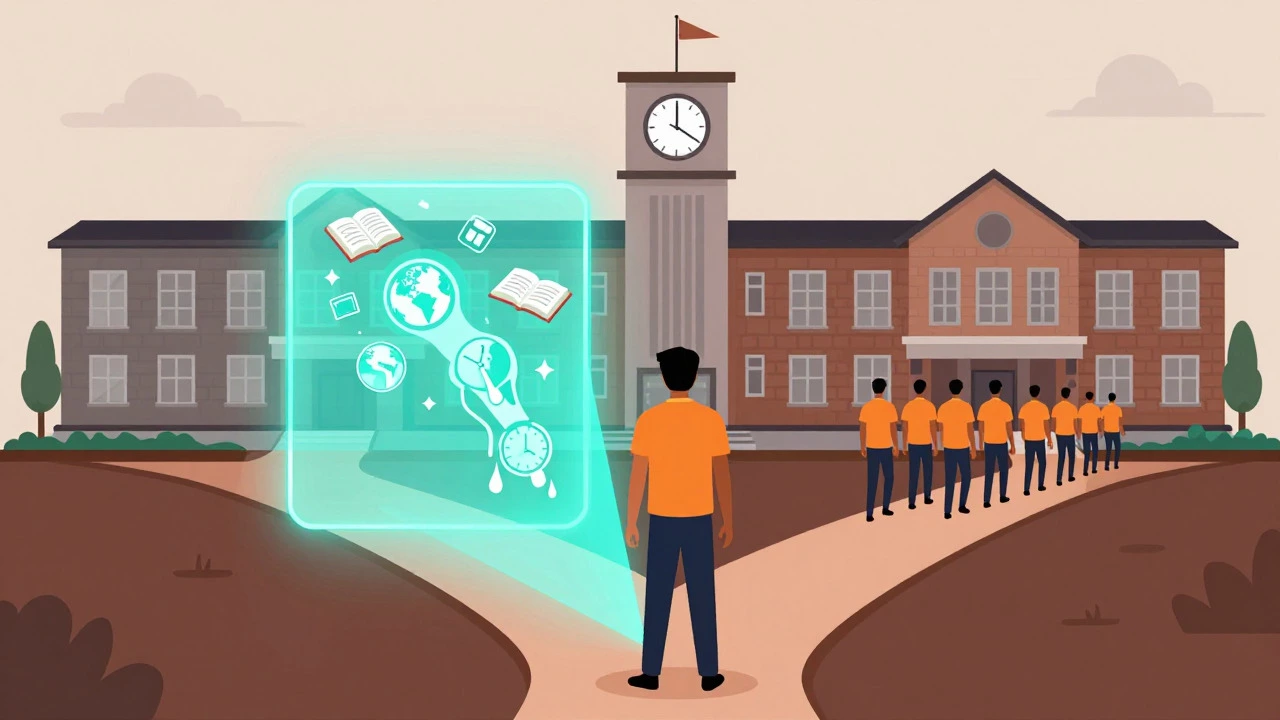
The fundamental difference lies in delivery and interaction. eLearning decouples time and place, allowing flexibility. Classroom learning couples them, providing structure and social immersion. Neither is inherently superior; they serve different cognitive and logistical needs.
Flexibility and Control Over Learning Pace
One of the biggest advantages of eLearning is autonomy. You control when, where, and how fast you learn. If you grasp a concept quickly, you can skip ahead. If you struggle, you can rewind and rewatch. This self-paced nature is crucial for adult learners balancing jobs and family responsibilities.
Consider a marketing professional trying to learn data analytics. In a classroom setting, they might fall behind if the instructor moves too fast or get bored if the pace is too slow. With eLearning platforms, they can pause during complex SQL queries, take notes, and resume later. This adaptability reduces stress and improves retention for many learners.
However, this freedom requires discipline. Without deadlines or peer pressure, procrastination becomes a real risk. Studies show that completion rates for self-paced online courses often hover around 10-15%, compared to much higher rates in structured classroom environments. The lack of external accountability is a double-edged sword.
Interaction and Social Dynamics
Human beings are social creatures, and learning is no exception. Classroom learning excels in fostering interpersonal connections. Group discussions, debates, and collaborative projects build soft skills like communication, teamwork, and conflict resolution. These interactions happen naturally, often leading to networking opportunities and lasting friendships.
eLearning attempts to replicate this through forums, chat rooms, and video conferencing tools like Zoom. While technology has improved significantly, the spontaneity of face-to-face interaction is still missing. A quick question raised by hand in class gets an immediate answer. In an online forum, you might wait hours or days for a response, breaking the flow of thought.
That said, eLearning can be more inclusive for introverted learners. Some students feel intimidated speaking up in large lectures. Online platforms allow them to contribute via text, reducing anxiety and encouraging participation from those who might otherwise stay silent.
| Feature | eLearning | Classroom Learning |
|---|---|---|
| Flexibility | High - Learn anytime, anywhere | Low - Fixed schedule and location |
| Cost | Generally lower (no commute, housing) | Higher (tuition, materials, travel) |
| Interaction | Mediated by technology, asynchronous options | Direct, immediate, face-to-face |
| Pacing | Self-directed | Instructor-led, uniform pace |
| Social Skills | Limited development unless specifically designed | Natural development through group work |
Cost and Accessibility
Money talks, and eLearning usually wins on affordability. Traditional education involves tuition fees, textbooks, commuting costs, and sometimes relocation expenses. Online courses often eliminate or reduce these barriers. Many high-quality resources are available for free or at a fraction of the cost of a university degree.
For example, a certification course in project management might cost $2,000 in a local institute, including travel and accommodation. An equivalent online program could cost $300, with all materials provided digitally. This democratization of access allows people from remote areas or lower-income backgrounds to pursue education without financial ruin.
However, accessibility depends on reliable internet and hardware. In regions with poor connectivity, eLearning can become frustrating or impossible. Classroom settings provide equal access to resources regardless of a student’s home situation, assuming they can attend physically.
Learning Outcomes and Effectiveness
Does one method produce better results? Research suggests it depends on the subject matter and learner style. For technical skills like coding or graphic design, eLearning offers hands-on practice with immediate feedback loops. Interactive simulations and sandbox environments allow trial and error without fear of failure.
For subjects requiring nuanced discussion, such as philosophy or law, classroom debate fosters deeper critical thinking. Hearing diverse perspectives in real-time challenges assumptions and refines arguments. Virtual discussions can feel stilted and less dynamic.
Retention rates also vary. Active engagement is key. Passive video watching leads to low retention. Interactive eLearning modules with quizzes and gamification elements perform better. Similarly, passive listening in a lecture is ineffective. Participatory classroom activities boost memory consolidation.

Blended Learning: The Best of Both Worlds?
Increasingly, educators are adopting blended models that combine eLearning and classroom elements. Students watch lectures online and use class time for discussions, problem-solving, and collaboration. This approach maximizes efficiency: foundational knowledge is acquired independently, while valuable face-to-face time is used for higher-order thinking.
This hybrid model addresses the weaknesses of both pure methods. It provides flexibility and cost savings of eLearning while maintaining the social and interactive benefits of classroom learning. Institutions worldwide are investing in LMS platforms to support this shift, recognizing that rigid adherence to one format limits potential.
Choosing the Right Path for You
So, which should you pick? Ask yourself these questions:
- What is your learning style? Do you thrive with structure and social interaction, or do you prefer independence and quiet focus?
- What are your constraints? Do you have limited time, budget, or geographic mobility?
- What are your goals? Are you seeking certification, career advancement, or personal enrichment?
- Do you need networking? Is building professional relationships part of your objective?
If you value flexibility, cost-effectiveness, and self-direction, eLearning is likely the better fit. If you crave community, immediate feedback, and immersive experiences, classroom learning may serve you better. For many, a mix of both offers the most balanced and effective educational journey.
Is eLearning recognized by employers?
Yes, increasingly so. Major tech companies and global organizations now accept certifications from reputable online platforms like Coursera, edX, and LinkedIn Learning. The key is choosing accredited programs that align with industry standards.
Which is better for children: eLearning or classroom?
For young children, classroom learning is generally preferred due to the need for social development, supervision, and structured routines. eLearning can supplement but rarely replace the holistic environment of a school.
Can I switch between eLearning and classroom modes?
Absolutely. Many institutions offer flexible pathways. You might start with online modules and attend intensive workshops later, or vice versa. Blended learning makes transitions seamless.
Are online degrees as valuable as traditional ones?
From accredited universities, yes. Employers care more about the institution’s reputation and the skills demonstrated than the mode of delivery. Ensure the program is regionally or nationally accredited.
How do I stay motivated in eLearning?
Set clear goals, create a dedicated study space, join online study groups, and track progress. Use productivity apps and establish regular schedules to mimic the structure of a classroom.
