📊 Exam Difficulty Comparison Tool
Select an exam to view detailed statistics and comparison metrics:
IIT JEE
The Joint Entrance Examination is India's premier engineering entrance test, known for its advanced problem-solving requirements.
Key Statistics
Candidates
~1 Million
Duration
~6 Hours
Primary Challenge: Advanced Problem Solving under extreme time pressure.
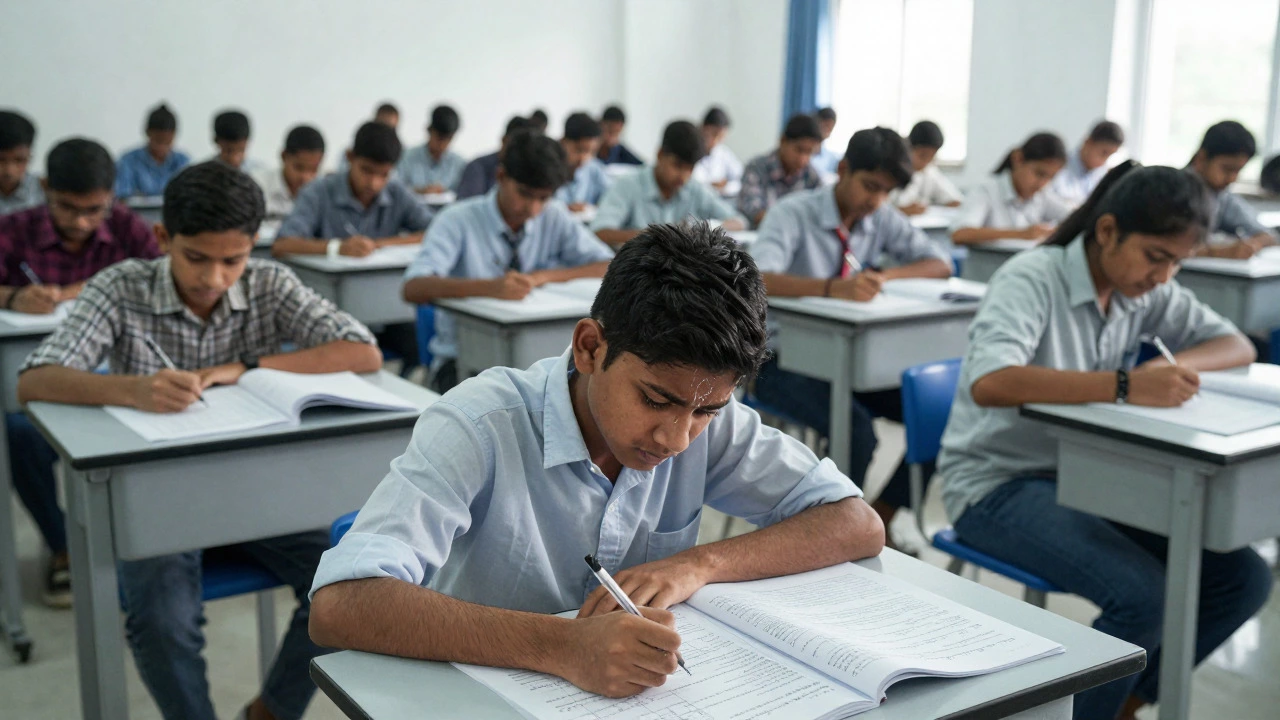
Imagine sitting in a silent hall for eight hours, staring at a question paper that feels like it was designed by someone who hates you. That is the reality for millions of students annually. But which exams actually hold the title for the most difficult? It isn't just about how much you study; it's about the sheer volume of material, the low pass rates, and the high stakes involved. Whether you are preparing for a career-defining qualification or just curious about academic endurance tests, understanding the landscape of the world's hardest exams helps set realistic expectations.
Why Some Exams Are Considered 'The Hardest'
Difficulty is subjective, but in the context of competitive exams is a standardized assessment used to select candidates for limited positions based on merit. When experts rank these tests, they look at three main factors: syllabus breadth, time pressure, and historical pass rates. An exam might have a simple format but be incredibly hard because only 1% of people pass. Conversely, another might have a huge syllabus but a higher success rate. The true "hardest" exams combine both massive content coverage with brutal selection criteria.
It is also worth noting that "hard" can mean different things to different people. For some, it is the mental toll of memorizing thousands of facts. For others, it is the pressure of performing well under timed conditions. This article focuses on exams where the combination of these factors creates a significant barrier to entry for professionals and students globally.
The Big Three: IIT JEE, China’s Gaokao, and US Bar Exam
While lists vary, three exams consistently top the charts for global difficulty. Each represents a different type of challenge: pure academic rigor, national-scale competition, and professional licensing.
1. IIT JEE (India)
IIT JEE is the Joint Entrance Examination conducted by the Indian Institutes of Technology to admit students into their undergraduate engineering programs. It is widely regarded as one of the toughest engineering entrance exams in the world. The test covers Physics, Chemistry, and Mathematics at an advanced level, often requiring problem-solving skills that go beyond standard high school curricula.
- Syllabus Scope: Covers Class 11 and 12 topics plus advanced applications.
- Competition: Over 1 million applicants compete for roughly 15,000 seats in IITs.
- Pass Rate: While many qualify for NITs, getting into a top-tier IIT requires being in the top 0.5% to 1% of performers.
- Duration: Typically two papers, each lasting around 3 hours.
The difficulty lies not just in knowing the concepts, but in applying them quickly and accurately under extreme pressure. Many students spend two full years preparing exclusively for this single test.
2. Gaokao (China)
Gaokao is the National College Entrance Examination in China, determining university admission for millions of students. If IIT JEE is a sprint, the Gaokao is a marathon. It lasts two days and covers Chinese language, mathematics, and foreign languages, plus elective subjects like physics, history, or biology depending on the student's track.
- Scale: Approximately 10-12 million candidates take the exam annually.
- Stakes: A score of even 1 point can drop a student hundreds of places in rankings.
- Preparation: Students often start intensive preparation in high school, studying 12-14 hours a day.
- Cultural Weight: The exam is seen as the primary determinant of social mobility in China.
The sheer number of participants means that the curve is incredibly steep. You aren't just competing against your classmates; you are competing against ten million other people for a spot in a prestigious university.
3. United States Bar Exam
US Bar Exam is a state-administered examination that law graduates must pass to practice law in the United States. Unlike undergraduate entrance exams, this is a post-graduate professional qualification. It tests whether you can apply legal principles to complex scenarios, not just recall facts.
- Format: Varies by state, but typically includes multiple-choice questions (MBE), essays, and performance tests.
- Pass Rate: Historically hovers around 70-80% for first-time takers, but drops significantly for repeat attempts.
- Duration: Usually taken over two days, with sections lasting up to six hours.
- Content: Covers constitutional law, contracts, torts, criminal law, and more.
The Bar Exam is tough because it demands analytical writing and critical thinking under strict time limits. You cannot guess your way through; you must demonstrate a deep understanding of legal reasoning.
| Exam | Country | Primary Purpose | Approximate Candidates | Key Challenge |
|---|---|---|---|---|
| IIT JEE | India | Engineering Admission | ~1 Million | Advanced Problem Solving |
| Gaokao | China | University Admission | ~10-12 Million | Volume & Competition Scale |
| US Bar Exam | USA | Legal Licensure | ~30,000 per cycle | Analytical Application |

Other Notable Mentions: Why They Make the List
Beyond the big three, several other exams frequently appear in "toughest" discussions due to specific regional or professional constraints.
CPA Exam (United States)
The Certified Public Accountant exam is notoriously difficult for accountants. It consists of four parts covering auditing, financial accounting, regulation, and business concepts. The pass rate for each section is often below 50%. What makes it hard is the length of the journey; candidates usually need 18 months to two years to complete all four sections, requiring sustained focus over a long period.
French Baccalauréat
In France, the Bac is the final year of secondary education. It is comprehensive, covering almost every subject studied throughout high school. While the pass rate is relatively high (over 90%), the depth of knowledge required across disciplines makes it a rigorous test of general education rather than specialized skill.
National Board of Medical Examiners (NBME) / USMLE
For aspiring doctors in the US, the US Medical Licensing Examination is a gauntlet. It spans three steps, testing basic sciences, clinical knowledge, and patient care. The volume of medical information is vast, and the stakes are life-and-death, adding psychological weight to the academic challenge.
How to Approach Preparing for These Exams
Knowing which exams are hard is one thing; surviving them is another. The strategies for tackling these tests share common threads, regardless of the subject matter.
- Start Early: Cramming rarely works for exams with such broad syllabi. Begin foundational learning 6-12 months in advance.
- Simulate Conditions: Practice under timed conditions. The stress of the clock is a major factor in failure. Get used to answering questions while tired.
- Focus on Weak Areas: Use past papers to identify patterns. Do not waste time re-studying what you already know perfectly.
- Mental Health Matters: Burnout is a real risk. Schedule breaks. A rested brain performs better than an exhausted one.
- Join Communities: Studying alone can be isolating. Peer groups provide motivation and help clarify confusing concepts.
For example, if you are preparing for the IIT JEE, spending 10 hours a day without sleep is counterproductive. Instead, aim for 6-8 hours of focused study with active recall techniques. Similarly, for the US Bar Exam, writing out answers fully is crucial, not just reading model answers.

Common Myths About Difficult Exams
There is a persistent myth that intelligence alone determines success in these exams. In reality, consistency and strategy play a far larger role. Another myth is that you need to be a genius. Most successful candidates are average students who developed superior study habits and time management skills.
Also, don't believe that the syllabus is fixed forever. Exams like the Gaokao and IIT JEE update their patterns regularly to keep students on their toes. Always check the latest official guidelines before starting your preparation.
Frequently Asked Questions
Which exam has the lowest pass rate?
This varies by year and country, but the CPA Exam sections in the US often have pass rates below 50%. In terms of entrance exams, the acceptance rate for top institutions via IIT JEE is effectively very low when considering only the highest tiers, though the technical "pass" rate to get any seat is higher.
Is the Gaokao harder than IIT JEE?
They are different types of hard. Gaokao is harder in terms of scale and memorization volume. IIT JEE is harder in terms of conceptual depth and problem-solving complexity. There is no definitive winner, but Gaokao affects a much larger population.
Can I retake these exams if I fail?
Yes, most of these exams allow multiple attempts. However, there may be age limits or a maximum number of tries. For example, the US Bar Exam allows unlimited attempts in most states, while IIT JEE has age criteria for eligibility.
Do these exams require coaching classes?
Coaching is highly recommended for IIT JEE and Gaokao due to the intensity of the curriculum. For the US Bar Exam, self-study is possible but commercial prep courses significantly improve pass rates by providing structured review and practice tests.
What is the best time of year to prepare for these exams?
Ideally, start 12 months before the exam date. For annual exams like the Gaokao (held in June) or IIT JEE (held in May), beginning in July or August of the previous year gives you ample time to cover the syllabus thoroughly.
